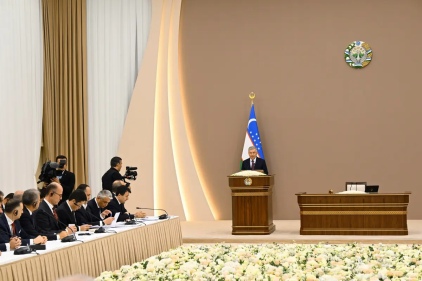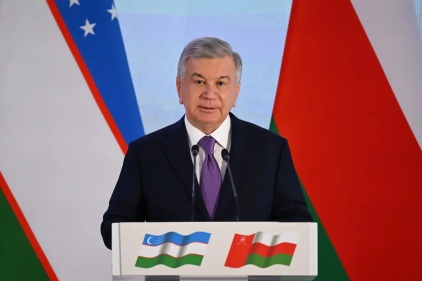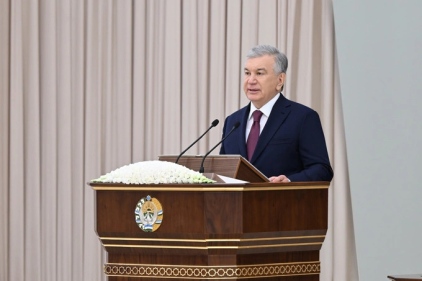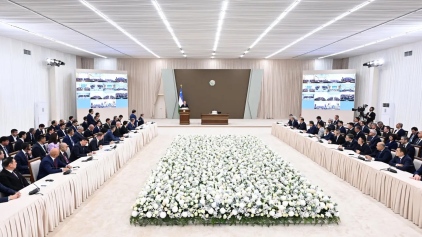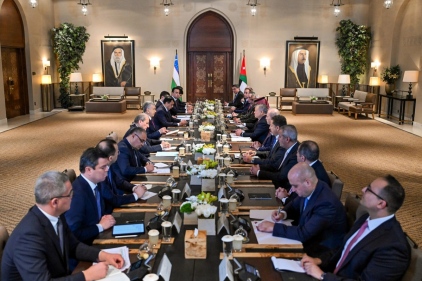
AMMAN – Uzbekistan's President Shavkat Mirziyoyev outlined priority areas for expanding economic ties with Jordan at a business forum in Amman on Tuesday, after the two countries signed a Preferential Trade Agreement, his press service said.
The agreement, signed during Mirziyoyev's state visit, provides for reduced customs duties on 300 product items. Mirziyoyev said he was confident it would significantly increase mutual supplies and lift bilateral trade turnover to $500 million. He also welcomed a substantial package of contracts and agreements signed at the forum.
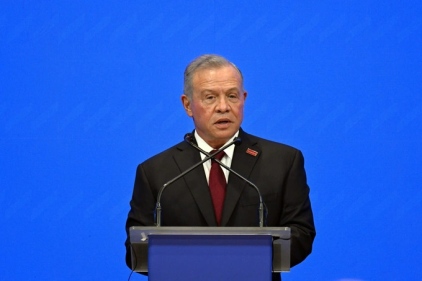
King Abdullah II attended the Uzbekistan-Jordan Business Forum, along with Fathi al-Jaghbir, head of Jordan's Chamber of Commerce and Industry, members of both governments and company representatives.
The King called the agreement an important strategic step toward stronger economic relations, wider trade and better market access. He stressed the need for continued joint work on "turning the opportunities between the two countries into concrete, tangible projects," and cited Jordan's strategic location and wide network of free trade agreements as competitive advantages.
Mirziyoyev named textiles, mining, pharmaceuticals, chemicals and agriculture as priority areas. He proposed joint textile production in the Aqaba Special Economic Zone on the Red Sea, using raw materials and semi-finished goods from Uzbekistan, with finished goods exported to third-country markets.
He invited Jordanian investors to join critical minerals projects at the Kelajak Metallari technoparks in Tashkent and Samarkand. He also promised conditions and incentives for Jordanian partners in the Tashkent Pharma Park cluster for joint pharmaceutical production and technology transfer.
In chemicals, the president pointed to prospects for mineral fertilizer production and welcomed agreements on food additives, household chemicals and plant protection products. In agriculture, he said joint clusters and the development of seed farming, horticulture and livestock breeding could strengthen food security in both countries.
The sides also discussed projects in tourism, leather processing, telemedicine, food and building materials production, electrical engineering and logistics. The next forum will be held in Tashkent in March next year.
Direct flights between Tashkent and Amman began and a mutual visa-free regime took effect after the King's visit to Samarkand last year. The first meetings of the Intergovernmental Commission and the Business Council have since been held.
Mutual trade has grown almost ninefold over the past five years, and by 80% in 2025 alone, the press service said. More than 20 enterprises with Jordanian capital operate in Uzbekistan.
Stay up to date with all the latest news: