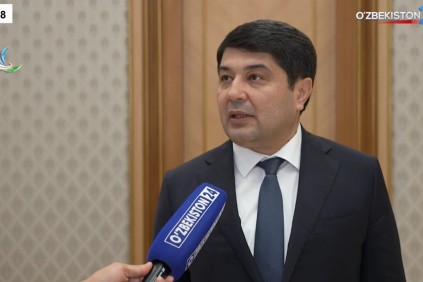
Uzbekistan plans to introduce a new methodology for calculating electricity and gas prices, according to the Ministry of Economy and Finance.
The country will adopt the Regulatory Asset Base (RAB) methodology. Under this framework, utility tariffs are calculated not only based on a company's current operating expenses but also by factoring in the value of its regulated assets. These assets include power grids, machinery, substations, gas pipelines, and other infrastructure essential for delivering services.
The ministry noted that implementing the RAB framework is part of a broader package of energy sector reforms. These initiatives aim to strengthen energy security, boost operational efficiency, and attract long-term investments.
The ministry emphasized that the need for a transparent regulatory framework for pricing has become critical. This urgency is driven by rising demand for electricity and natural gas, the necessity to develop grid infrastructure, and the goal of attracting private capital.
According to the ministry, the RAB methodology will make price structures more transparent for both consumers and regulated utilities, while also enhancing the predictability of future tariff policies.
The ministry believes that implementing the RAB framework will improve the financial health of companies within the fuel and energy complex, boost their credit ratings, and encourage the adoption of international financial reporting standards.
It explicitly emphasizes that substantial capital investments are required to modernize and expand energy systems, reduce technical losses, and commission new capacities. A transparent regulatory framework is expected to strengthen investor confidence and unlock opportunities to secure both domestic and international financing.
The next phase will involve the gradual rollout of long-term regulatory mechanisms. Initially, the tariff regulation period will be set for one year, with plans to progressively extend it to five years. The ministry notes that this extension is designed to make pricing more predictable for both consumers and regulated utilities, ensuring that price adjustments are gradual and orderly.
According to the initial criteria published, the regulatory asset base will encompass fixed assets, intangible assets, and working capital. The value of these assets will be determined based on the utilities' financial statements, prepared in accordance with International Financial Reporting Standards (IFRS).
At the same time, the regulatory asset base (RAB) will exclude freely received assets, ongoing construction projects, and equipment that has not been commissioned within the established timeframes.
Operating expenses will be reviewed by the regulatory authority as part of the utilities' tariff applications. When these expenses are reassessed, the inflation rate will be factored in, and the expenditures themselves must reflect targeted benchmarks for saving fuel and energy resources.
The Ministry of Economy and Finance also stated that following the initial implementation of RAB-based regulation, and building upon the tariff revisions made in 2024 and 2025, prices are expected to approach cost-recovery levels.
Following the rollout of the new methodology, the cost of electricity production is projected to rise by approximately 9%, transmission services by 30%, electricity distribution by about 10%, and natural gas distribution by roughly 23%. Notably, these forecasts do not directly represent consumer tariffs; instead, they reflect the costs of individual links across the supply chain.
Any portion of the production, transmission, and distribution costs for electricity and natural gas that exceeds the tariffs set for end-consumers is planned to be covered by the state budget.
Stay up to date with all the latest news: