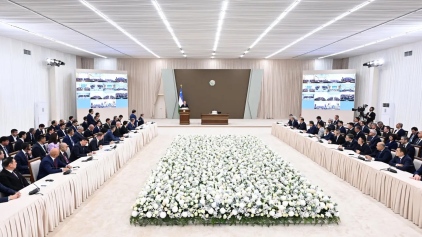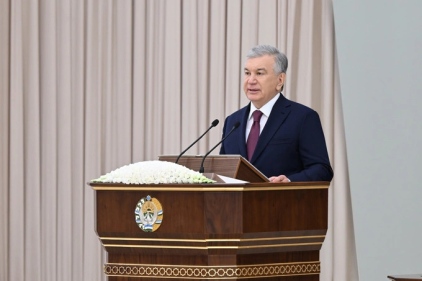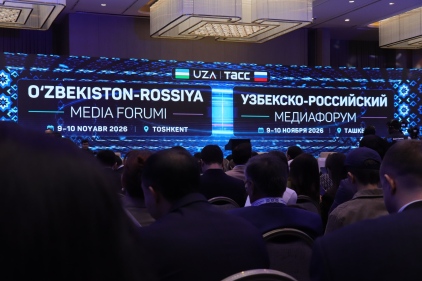
Presidential press secretary Sherzod Asadov proposed four priority areas for media cooperation between Uzbekistan and Russia at the third Uzbekistan-Russia Media Forum in Tashkent, where he also warned that fakes and deepfakes are doubling every year.
Asadov said the volume of fake stories, including those created with artificial intelligence, is doubling annually.
“No national media system can tackle such a challenge alone. In this light, the media’s responsibility is immense in ensuring that the information being disseminated is truthful and in preventing its abuse to manipulate public opinion,” he said.
His proposals cover training journalists through internships, joint journalism schools and shared education platforms, and a joint fight against disinformation, including pooling expert capacity and developing common standards for verifying information. They also include joint technology products in digital platforms, artificial intelligence and Big Data, and expanded direct, regular contacts among editorial offices, journalists and bloggers of both countries.
Asadov said about 2,700 media outlets operate in Uzbekistan, 67% of them privately owned. Internet coverage has reached 94%, and the number of active content consumers has risen from 14.7 million in 2017 to more than 32.7 million.
He said output in the publishing sector has doubled this year, with 15,000 book titles printed in a combined run of over 60 million copies. More than 26,000 media products prepared by the Content Center have been viewed nearly 2 billion times.
Uzbekistan has set up a specialised education platform on disinformation, which has trained 11,000 young specialists, Asadov said. Central Asia’s first National Media Bank has also been launched, giving open access to tens of thousands of photos and videos about Uzbekistan.