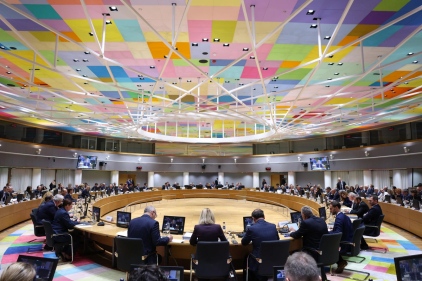
The second ministerial meeting on interregional security and connectivity took place in Brussels on Nov. 16. Uzbekistan and other Central Asian countries, Armenia, Azerbaijan, Moldova, Türkiye, Ukraine and EU member states reaffirmed their intention to expand cooperation in transport, energy and digital infrastructure and to develop the Trans-Caspian transport corridor, the European Commission said.
The meeting was chaired by the EU’s top diplomat, Kaja Kallas, Enlargement Commissioner Marta Kos and International Partnerships Commissioner Jozef Sikela. Central Asian countries took part in the session on interregional links.
The participants’ priorities include modernizing railways, roads, ports and border crossings, simplifying customs procedures, and building secure cross-border fiber-optic lines, satellite communications infrastructure, data centers, power grids, renewable energy and energy storage.
The Middle Corridor and EU plans
The Middle Corridor, also known as the Trans-Caspian International Transport Route, remains one of the EU’s priorities. It links Central Asia with Europe via the Caspian Sea, the South Caucasus, Türkiye and the Black Sea. The European Commission aims to triple trade flows along the route by 2030 and cut delivery times. Besides modernizing ports, railways and roads, the co-chairs called for faster border crossings and closer coordination between customs services.
“Excessive dependence makes us vulnerable. We have seen that energy blackmail, acute raw-material shortages or overreliance on a small number of key trade routes can limit our freedom of action. We are diversifying our options. Today’s ministerial meeting gave fresh momentum to our joint efforts to strengthen links along the Middle Corridor. The EU and our partner countries have made significant progress since our first meeting last year. Our shared goal goes beyond simply connecting markets: it is about building trust, supporting lasting peace and delivering tangible benefits for our citizens and businesses,” Kos said.
“Central Asia is becoming increasingly important geopolitically for Europe,” Sikela said. He said that since the last meeting, the EU has expanded its cooperation with the region to include energy and digital infrastructure alongside transport.
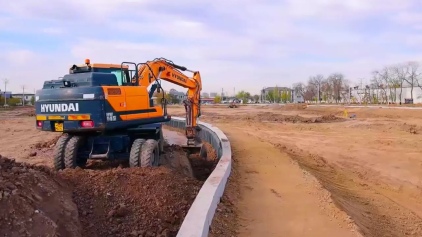
Kos and Sikela attended the Trans-Caspian Corridor and Connectivity Investors Forum in Tashkent in November 2025. The forum produced several projects for the Trans-Caspian transport corridor, including the modernization of a section of the A380 international highway near Nukus in Uzbekistan, the port of Aktau in Kazakhstan and the Karabalta–Chaldovar road in Kyrgyzstan.
What Ukraine, Armenia and Türkiye proposed
Ukrainian Foreign Minister Andrii Sybiha addressed the Central Asian representatives separately. He said Kyiv is ready to help countries of the region diversify their transport routes, strengthen their independence and support economic development. According to Ukraine’s Foreign Ministry, which relayed his words, Ukraine is ready to connect the Middle Corridor with European markets via the Black Sea, the Danube and the EU’s existing Solidarity Lanes.
Sybiha also proposed closer coordination of infrastructure projects with the European Commission, international financial institutions, Türkiye and the countries of the South Caucasus and Central Asia. Practical steps he named included modernizing ports, developing European-gauge railways and speeding up border procedures.
Armenian Foreign Minister Ararat Mirzoyan described the preparation of the legal and treaty framework and the work under way on the ground for the TRIPP transport route project. He named modernizing border crossings, simplifying customs procedures and digitalizing trade as areas of cooperation with the EU.
Türkiye’s Foreign Minister Hakan Fidan called for coordinated development of the Middle Corridor, the Development Road, the Three Seas Initiative and Global Gateway. He said Türkiye and EU countries could give new momentum to economic relations, to the benefit of both sides, if they combine their complementary capabilities and experience in a common strategic approach.
Stay up to date with all the latest news: