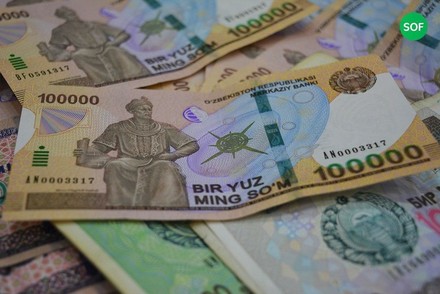
The Central Bank of Uzbekistan has deployed a system called the Funds Distribution Centre that lets people receive salaries, bonuses and other payments on a bank card or e-wallet of their choice, the regulator’s press service said today.
The system allows employers to transfer money regardless of which bank serves their organisation. In the first phase it is intended for private-sector organisations and their employees. A video published by the central bank said a second phase is planned to extend it to public-sector bodies, though the regulator has not given a timeline.
The central bank said it aims to end what it described as “payroll lock-in”. Employees will be able to use cards they already hold and choose a bank based on their own preferences, service terms and available services.
Employees do not need to register separately or open a special account. They need only give their employer’s accounting department the details of the card or e-wallet where they want to be paid. The card or e-wallet must be in the employee’s own name, and payments to another person’s card are not permitted.
The employer compiles a single electronic payment register with employee information and recipient details. The employer’s bank certifies it with an electronic digital signature and sends it to the central bank’s Funds Distribution Centre. The system checks the data and distributes the payments among the banks employees have chosen, and those banks credit the money to the relevant cards or e-wallets.
Employers can therefore pay staff who bank with different institutions through one register, and employees can later change their bank or card details by giving new information to their employer.
Previously, employees generally had to open a separate card with the bank their employer had contracted under a payroll scheme. Even if they already held a card from another bank, they had to get a new one and then, if necessary, move the money between accounts themselves. The system’s features will be expanded in response to user feedback, the regulator said.