The Tashkent City Council of People’s Deputies has approved a fast-tracked list of Public-Private Partnership (PPP) projects to be rolled out across the capital under a streamlined administrative process.
The decision, finalized on May 26, was enacted pursuant to a presidential decree dated July 26, 2023. This decree authorized a legal experiment in Tashkent aimed at executing investment initiatives and modernizing municipal infrastructure through mutually beneficial collaborations between the state and the private sector.
The newly ratified catalog comprises 43 projects. Out of this total, 40 initiatives are designated for the installation of state-of-the-art fueling stations, while the remaining three focus on developing public spaces, parking structures, and recreational facilities. All approved contracts are structured under a 10-year lease and operational framework.
The heaviest infrastructure concentration will target the Bektemir district, which has been allocated 10 fueling station projects. Meanwhile, Yashnabad and Olmazor will each host 7 stations, followed by Uchtepa and Yunusabad with 4 projects each. The Chilanzar and Yangihayot districts are slated for 3 installations each, while Sergeli and Mirzo-Ulugbek will round out the infrastructure rollout with 1 project apiece.
Three urban infrastructure initiatives have been specifically integrated into the approved development catalog. In the Olmazor district, within the Jiydali neighborhood along the Small Ring Road, plans outline the creation of a modern complex featuring a dedicated food court, athletic sports grounds, and various recreational amenities.
The remaining two infrastructure projects focus on expanding parking networks within the Chilanzar district. These facilities will be constructed in the Beshkorgan neighborhood at the junction of the Small Ring Road and Bunyodkor Avenue, as well as in the Katta Dombirobod neighborhood along Gavkhar Street.
According to the official supplementary notes, the Tashkent City Administration retains the authority to amend this list as required. Under the executive directives of the city Mayor, these assets may be leased out under the Public-Private Partnership framework either bundled together as a single corporate lot or split into independent individual tenders. The exact boundaries of the land parcels transferred under these PPP agreements will be legally codified in the final property cadastral documentation.
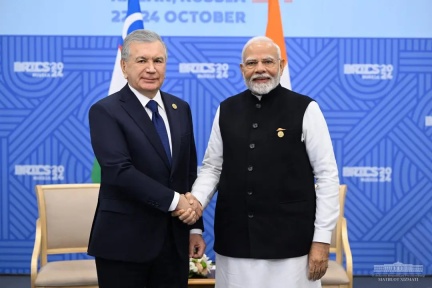
In a parallel development, the American energy giant Gulf Oil intends to establish a network of at least 100 fueling stations across Uzbekistan, backed by a $150 million direct investment. The expansion roadmap was disclosed by Craig Kramer, Vice President of Gulf Oil, during a high-level summit between President Shavkat Mirziyoyev and executives from leading American businesses and financial institutions held in Washington.
The Ministry of Energy confirmed that the infrastructure rollout will be entirely funded and executed by the foreign investor, while the state-owned holding company Uzbekneftegaz will serve as the designated public partner.
Uzbekneftegaz previously controlled the country’s largest domestic retail fueling network, UNG Petro, alongside the Chinaz Oil Refinery. In November 2023, both strategic assets were privatized and transferred to Petroleum Technology Group—a private enterprise owned by Daniyar Kamilov, the son of former Minister of Foreign Affairs Abdulaziz Kamilov. The retail fuel network has since rebranded and currently operates under the commercial name Carvon.
Stay up to date with all the latest news: