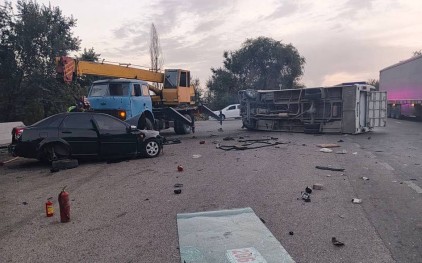
It was getting dark when a large truck that had somehow wandered into the neighborhood knocked over one of the power line poles. Easy enough to say — but what followed was terrifying.
The crash was deafening. For a moment, everything flashed as if the world had caught fire. The transformer substation hummed and flickered for a second, then went dark. Birds that had settled in the trees scattered in panic. Then a strange, heavy darkness swallowed everything whole.
Thankfully, no one was hurt.
Crews moved quickly to fix the problem. But people still went without power until well into the following day — fifteen hours without electricity.
That doesn't sound like much, does it? But think about what those fifteen hours actually meant. They served as a reminder that electricity isn't just light — it's one of the essential threads running through the fabric of how we live.
You wake up. No power. Your phone died overnight because you forgot to charge it. The refrigerator has been off all night — you can only imagine what's happened to the food inside. The elevator isn't working. What do the elderly residents on the upper floors do? And this happened in summer. Picture what it would look like in winter.
The shopkeepers in the neighborhood scrambled. The barbershop shut its doors. Food spoiled in a single day's heat.
One neighborhood. One night. So many problems.
Scaling that picture to an entire country is almost impossible to imagine. That's precisely why problems in the energy system can't be treated as purely technical matters. They ripple through every layer of society — leaving a deep mark on a chain that runs from a family's dinner table all the way to the national budget.
Even today, there are countries where power cuts stretch on for ten hours a day. Families living in those places spend a significant chunk of their income each month on generators. It takes a real toll on household budgets.
And the truth is, this kind of chronic disruption doesn't help any sector grow. Power outages steadily eat into earnings. Small businesses simply can't survive without electricity. In industry, the losses mount into serious figures. Metallurgy, textiles, cement, chemicals — all of them depend on an uninterrupted power supply. When the lights go out, production lines stop. Raw materials go to waste. Orders go unfulfilled.
Starting from one neighborhood, this thread keeps pulling us deeper. Interestingly, while we're talking about countries where electricity is cut for half a day at a time, a natural question arises: what was our own situation like a decade ago?
If we're being honest, Uzbekistan's energy system went through its most severe tests in recent memory. Aging infrastructure, rising demand, and climate unpredictability all came crashing together at once. Outages happened without notice, without explanation, without warning. People learned to live with it — but learning to live with something and accepting it as the right way forward are two very different things. Then something began to change.
Over the past eight to nine years, the guiding principle shifted from patching the system to rebuilding it. The country set out to construct an entirely new architecture for its energy sector.
Today's results aren't just numbers in a dry report — they are the product of concrete, deliberate work. For instance, the construction and reconstruction of 2,123 kilometers of high-voltage transmission lines injected new life into the grid. The commissioning of 68 major substations and the addition of 12,608 megavolt-amperes of capacity are part of that same story.
Beyond that, the modernization of more than 77,000 kilometers of electricity distribution networks, along with upgrades to over 280 substations and more than 24,000 transformers, significantly improved the system's reliability. Crucially, these efforts also had a positive environmental impact: savings of over 128 million cubic meters of natural gas and a measurable reduction in harmful atmospheric emissions stand as living proof of what energy efficiency can look like in practice.
Among experts, debates often arise about whether conventional thermal power plants are preferable or whether solar and wind should take priority.
Uzbekistan's answer was integration — taking both and making them work together. Today, the country's 148 power plants have a combined capacity of nearly 26,000 megawatts. Thermal stations carry the baseline load, while clean energy is expanding at a remarkable pace.
The numbers don't lie. In the first four months of 2026, solar and wind plants generated 4 billion kilowatt-hours of electricity — 29 percent more than the same period a year ago. That kind of growth within a single year isn't incremental. That's a transformation.
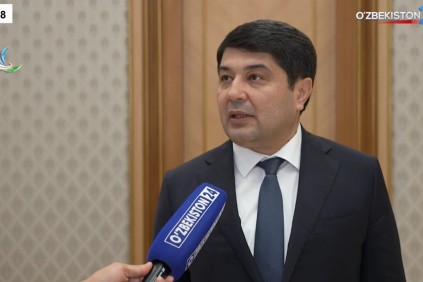
These shifts in the energy sector are now reaching beyond local significance and registering on the international stage. The figures presented by Deputy Prime Minister Jamshid Khodjaev at the recent Asian Development Bank forum in Samarkand offer compelling evidence of that.
As he noted, the sector has attracted $35 billion in investment in recent years, with 9 gigawatts of new generation capacity brought online. Annual electricity production rose from 60 billion to 85 billion kilowatt-hours. Most significantly, Uzbekistan — once an electricity importer — is now emerging as a reliable regional supplier, exporting energy to Kazakhstan, Tajikistan, Kyrgyzstan, and Afghanistan.
Renewable energy is no longer just an aspiration or a quota on paper. It has become an inseparable, foundational part of the system. From the combined-cycle plant in Navoi to the vast solar fields of Samarkand, from wind turbines in the Bukhara steppe to hydroelectric stations on mountain rivers — all of it points toward the same destination: electricity that is stable, reliable, and clean.
Of course, renewable energy comes with its own complexities. It depends on the weather. To address that, energy storage systems are being deployed. In the past year alone, ten such systems with a combined capacity of 1,245 megawatts have come online. The plan is to scale that figure to 4.5 gigawatts by 2030, with another eight storage systems set to be commissioned before the end of this year. This reflects a serious, scientifically grounded approach to the country's energy future.
But energy isn't just steel, concrete, and solar panels. Behind all of it are people's everyday lives. The shift to digital management, the round-the-clock operation of the 1154 and 1104 customer service centers, and regional utility Telegram bots all serve to replace the old distrust people once had toward the system with something new: transparency and accountability.
Remember that night in the neighborhood. The crash. Then the darkness.
The system keeps improving. The plants keep running. But energy security isn't built by infrastructure alone. It's also shaped by how each of us relates to electricity. Production may rise — but that doesn't reduce our individual responsibility to use it wisely.
Larger projects still lie ahead. But what matters most is sustainability. The system must work in a way that every household and every industrial enterprise can feel at ease — no anxiety, no uncertainty.
International organizations are acknowledging that we've chosen the right path. But the greatest recognition of all is the peace of mind of ordinary people. The quiet absence of the question: "Will the lights go out?" — that, for us, is the most important measure of success.
Still, let's not forget one thing. Energy is not an infinite resource. Behind it lies the tireless labor of countless people, the flow of rivers, the heat of the sun, and the steady operation of enormous machines. If we appreciate this gift, and use it without waste — wisely and responsibly — the system will only grow stronger.
Temurbek Ruziev