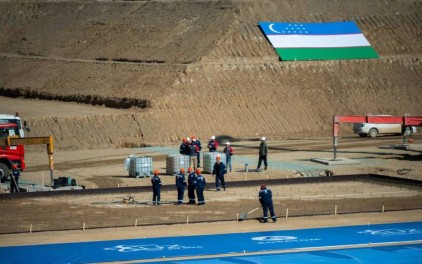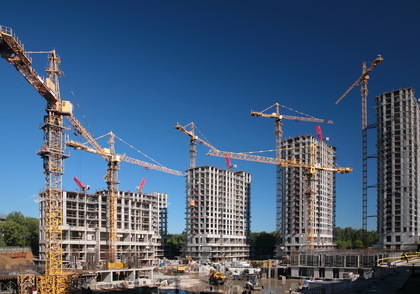
Starting July 1, the practice of parallel design and construction for new projects will be abolished under a new presidential decree signed on June 4. The document was published on the Telegram channel of the Chamber of Commerce and Industry.
As an alternative, a phased design mechanism is being introduced on an experimental basis. Under this framework, construction work can begin immediately after each individual phase of the project passes official evaluation and registration. This procedure applies strictly to projects financed through entrepreneurs' private funds or direct foreign investment, excluding multi-family residential buildings. For projects funded by the state budget, phased design will only be permitted via explicit decisions by the President or the Government.
According to the decree, the government aims to slash both the time and financial costs incurred by citizens and businesses when obtaining building permits by half. This will be achieved by expanding digitalization, integrating artificial intelligence tools, and enhancing process transparency.
The decree strictly prohibits interior remodeling and structural modifications in apartment buildings older than 50 years, with the sole exception of reinforcement and stabilization work.
Furthermore, contractors who fail to comply with directives from the State Inspection to fix structural or cosmetic defects arising in residential buildings during their warranty period will face penalty points on their official performance rating scores.
By September 1, a unified state service for issuing architectural and urban planning requirements is slated to launch across all regions. In municipalities and towns where general development plans have already been digitized, these requirements will be generated automatically.
Starting July 1, connecting newly constructed properties to public utilities will operate under a streamlined "one application, one payment, all connection points" system. By the end of this year in Tashkent—and by the end of next year across all other regions—comprehensive data on available capacities, current utility grid loads, and connection nodes will be fully integrated into a state digital platform. Utilizing this centralized data, technical specifications for connecting properties to utility and communication grids will be issued automatically, removing the human factor entirely in cities with digitized master plans.
Beginning in September, the installation of continuous video surveillance cameras will become mandatory at selected new construction sites. This rule will apply to the construction of multi-family residential complexes, social, tourism, retail, and industrial infrastructure developments, as well as any project valued over 3 billion soums that is funded by the state budget.
Furthermore, all executive construction documentation will transition into a fully electronic format. The evaluation of building permit applications and the official commissioning of completed structures will also be phased into an automated process powered by artificial intelligence.
To oversee these changes, the Republican Center for Economic Reforms and Pricing in Urban Planning will be established under the Ministry of Construction and Housing and Communal Economy. This body will be tasked with digitalizing the sector's pricing mechanisms, monitoring the market value of raw building materials, and maintaining the national classifier of construction resources.
To provide additional support for local construction and design firms, import customs duties will be entirely waived until July 1, 2029, on specialized building machinery, laboratory instruments, and field inspection equipment not currently manufactured within Uzbekistan.
Finally, the government plans to launch joint educational programs in architecture and civil engineering alongside renowned foreign academic institutions, specifically partnering with the University of Vienna in Austria and Sapienza University of Rome in Italy.
Stay up to date with all the latest news: