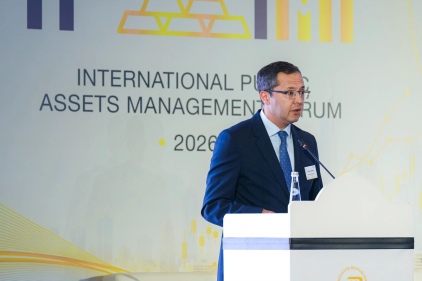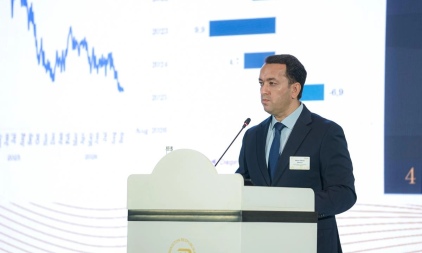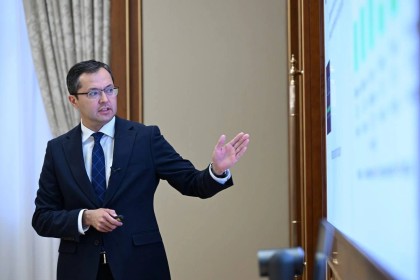
Central banks are currently grappling with a difficult balancing act: curbing inflation without stifling economic growth, the governor of the Central Bank Timur Ishmetov highlighted this dilemma in an interview with Uzreport TV during the IMF Spring Meetings in Washington.
He noted that the escalating conflict in the Middle East is already impacting global inflation by driving up oil prices and creating logistical bottlenecks.
"This conflict isn't just a regional issue; it affects the entire world," he stated. "First and foremost, we see it in rising oil prices, which inevitably fuels global inflation. Other prices follow suit. Beyond oil, there are significant logistical hurdles in the region—transportation is becoming more complex, adding even more pressure to costs."
Under these conditions, he noted that the primary challenge for central banks is the accurate assessment of risks.
"This is crucial because when businesses face disruptions—especially in import-export operations—they may struggle to keep up with their bank loans," he explained.
Although the direct impact of regional conflicts on Uzbekistan remains limited, indirect effects necessitate a swift response. He pointed to government measures, such as subsidizing transport costs for food imports, as a way to prevent sudden price spikes.
"This was a key point of discussion: even when aid is provided, it must be targeted, temporary, and implemented through transparent subsidy mechanisms," he emphasized.
Uzreport TV, citing the Central Bank, reported that global currency flows have shifted significantly amid rising geopolitical tensions. This trend may reduce foreign currency inflows in certain countries, putting pressure on exchange rates. Consequently, regulators are advised to look beyond inflation and prioritize the stability of the entire banking system.
When asked about the possibility of further tightening monetary policy—specifically raising the base rate, which has remained at 14% since March 2025—the governor Ishmetov urged a cautious approach.
"As for a rate hike, I believe it is premature to discuss that. In my view, our current monetary policy is sufficiently tight and appropriate for the present situation," he stated.
He emphasized the need to maintain a delicate balance between controlling inflation and fostering economic growth.
"At the end of the day, economic growth is the engine that drives progress across all sectors. It is vital. However, if risks persist, our policy will be adjusted as the situation evolves," the Central Bank chief noted.
This year, Uzbek authorities aim to bring inflation down to 6.5%, while the IMF projects a slightly higher figure of 6.8%.
Ishmetov identified the flexibility of the national currency as a cornerstone of economic resilience.
"For us, the primary concern right now isn't just inflation, but maintaining a free-floating exchange rate. Last year, despite increased volatility, the national currency actually strengthened. This is a crucial factor, as exchange rate flexibility helps absorb the impact of negative shocks on inflation," he explained.
Additionally, he announced that as of late 2026, all banks in Uzbekistan are expected to fully transition to International Financial Reporting Standards (IFRS). This move is intended to provide a "true picture" of asset health and enhance risk management across the sector.
"When issuing loans, it is imperative to prioritize high-quality borrowers. This was also a point of emphasis recommended by the IMF," Ishmetov concluded.
According to IMF forecasts, if the current pace of reform continues, Uzbekistan’s inflation is expected to reach its 5% target by the end of 2027.
Follow us on: