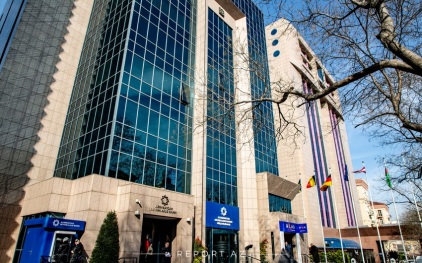
President Mirziyoyev signed a decree outlining additional steps to accelerate the privatization of Asakabank. The document sets the stage for a comprehensive institutional transformation, preparing the bank for the sale of shares to a strategic investor and formalizing the involvement of the European Bank for Reconstruction and Development (EBRD).
According to the decree, a tripartite agreement has already been reached between the Ministry of Economy and Finance, the EBRD, and Asakabank. This partnership aims to boost operational efficiency and capitalization, with the EBRD potentially acquiring a 15% stake in the bank.
As part of this overhaul, all banking operations will shift toward market-based principles. This includes phasing out non-core functions and aligning the book value of assets with their fair market value—specifically by incorporating the difference between the shares' nominal and market values into the bank's additional capital.
The Ministry of Economy and Finance has been tasked with establishing a mechanism within one month to cover potential losses from non-performing loans (NPLs) identified during asset quality reviews. This safety net may draw from the state budget as well as long-term ministry funds currently held within the bank.
To streamline the bank for privatization, several assets worth a combined 382.6 billion soums will be transferred to the State Assets Management Agency. These projects, which will eventually be privatized or placed under trust management, include:
- Yashil Energiya – 67 billion soums;
- Uz CLAAS Agro – 222.3 billion soums;
- Khorezm Invest Project – 90.2 billion soums;
- Sayhun Tomorqa Export – 2.9 billion soums.
Additionally, the decree outlines a framework for recovering distressed assets and adjusting the nominal value of the bank’s shares. The Central Bank has been advised to assist in developing modern approaches to risk management and the formation of reserves.
To strengthen the bank’s capital, approximately $95 million from the state budget is slated for allocation in 2026. Furthermore, net profits generated in 2024–2025 will not be distributed as dividends, but will instead be reinvested.
The Ministry of Economy and Finance has also been authorized to restore Asakabank’s capital, which is expected to decrease following the transfer of certain assets to the State Assets Management Agency. To achieve this, the ministry may convert nearly 2 trillion soums of existing loans issued to the bank into equity. Essentially, the state will waive the repayment of these loans to compensate the bank for the divestment of the four transferred assets.
Asakabank has been granted permission to hire international legal and financial consultants—including firms from the "Big Four"—to facilitate the transaction with the EBRD and prepare for the sale of a stake. The Ministry and the bank are tasked with submitting proposals regarding the valuation of the 15% stake and the terms of the investment agreement with the EBRD by September 1, 2026.
In a separate move, the decree mandates the development of a project for the site of the former Tashkent Agricultural Machinery Plant, ensuring its future use aligns with social and economic goals.
In May 2024, the president Mirziyoyev announced that an agreement had been signed with the EBRD regarding Asakabank’s privatization. Currently, the bank is owned primarily by the Fund for Reconstruction and Development (71.09%) and the Ministry of Economy and Finance (28.17%), with minor stakes held by the Bukhara Oil Refinery, Uzavtosanoat, Uzagrosugurta, and Uzbekinvest.
The timeline for privatizing Uzbekistan’s three largest banks has been postponed several times. While Asakabank’s privatization was once targeted for late 2023 and then late 2025, the latest schedule aims for a sale between 2026 and 2027.