The International Monetary Fund (IMF), in its Selected Issues report on Uzbekistan, has evaluated the scale and role of the state-owned sector in the country's economy.
According to data from the State Assets Management Agency cited by the IMF, the assets of state-owned enterprises (SOEs) reached 101% of GDP at the end of 2024, with the total number of companies standing at 2,148. Financial SOEs accounted for 52% of GDP, while non-financial enterprises made up 49%.
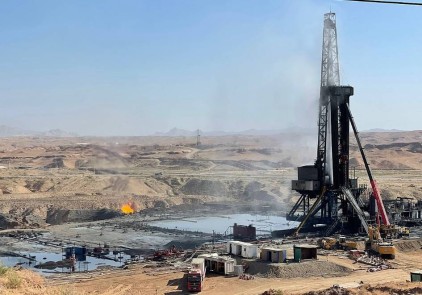
Within the asset structure of non-financial SOEs, mining companies held the largest share at 31%. The oil and gas sector and the electricity industry each accounted for 19%. The remaining 31% comprised enterprises in other industries, including road and transport infrastructure, as well as the chemical sector.
Mining companies generated the bulk of financial returns among non-financial SOEs, accounting for 29% of revenue, 69% of net profit, and 87% of dividends. In the financial sector, nearly all SOE assets were concentrated in nine state-owned commercial banks, which held 96% of the total assets of state-supported financial institutions.
The IMF points out that while SOE assets are primarily concentrated in partially competitive or regulated sectors (natural monopolies)—such as utilities, energy, finance, and other network industries—the breakdown by the absolute number of companies tells a different story. The fund estimates that roughly 84% of all SOEs actually operate in fully competitive markets.
For instance, the state in Uzbekistan still owns and operates: Markets and shopping complexes (31% of the total number of SOEs); Agricultural and processing enterprises (10%); Service and retail businesses (10%); Pharmaceutical, tourism, and social facilities (10%).
The report highlights that in these specific areas, it is "difficult to justify state ownership by pointing to market failures" that would warrant public intervention.
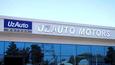
Furthermore, large non-financial SOEs are far more pervasive in Uzbekistan than is typical in international practice. Globally, state ownership tends to cluster around network infrastructure, such as utilities, transportation, and banking. In Uzbekistan, however, massive state-controlled enterprises continue to operate in competitive landscapes like mining, automotive manufacturing, and the chemical industry—sectors where the private sector typically dominates in other nations.
Furthermore, the majority of large state-owned enterprises (SOEs) in Uzbekistan are fully state-owned, whereas international practice frequently favors mixed ownership structures. For instance, roughly 60% of utility companies in emerging markets, including Brazil and China, utilize public-private ownership models, which sharpens incentives for operational efficiency.
Overall, the IMF evaluates that Uzbekistan's non-financial SOEs maintain a broader footprint in competitive sectors than their counterparts in other nations. Under the World Bank’s broader definition—which includes companies with at least a 10% state ownership stake—more than 80% of Uzbekistan's SOEs operate in competitive commercial sectors, compared to 70% documented in the global Business of the State database.
Extensive state intervention in commercial activities is typically linked to depressed productivity. This stems from lower entry rates for new businesses, higher market concentration, and inefficient labor reallocation.
The state’s share in banking assets also vastly exceeds international benchmarks. In middle-income economies, state ownership in banking averages around 23%, whereas in Uzbekistan, it stands at a staggering 63%. Research indicates that such high state concentration in commercial banking can increase financial sector vulnerability and create contingent liabilities for the national budget.
SOEs also remain a vital source of employment, with their payrolls counting 566,300 workers in 2024. This accounts for 4% of total economic employment, 8% of formal employment, and approximately 19% of employment within the central public sector.
The mining sector stood as the largest employer among these enterprises, capturing 18% of the total SOE workforce. The road and transport sector followed at 16%, and the oil and gas industry at 14%. Power generation, banking and finance, and the chemical industry each accounted for roughly 8% of employment. The remaining sectors combined made up 27% of the total state-enterprise workforce.
According to the State Assets Management Agency's database, significant shifts occurred within Uzbekistan's public sector portfolio over a six-year period. Out of an initial pool of 2,965 state-owned enterprises (SOEs) in 2020, a total of 2,845 companies were removed, while 1,797 new entities were added by February 2026. As a result, the total number of SOEs stood at 1,917 by the end of February 2026.
The primary drivers behind the removal of these enterprises included liquidation (1,313 companies), reorganization (757 companies), privatization (515 companies), and asset transfers into charter capitals or public-private partnership (PPP) initiatives (260 companies).
An appendix to the report lists Uzbekistan's largest strategic SOEs, which include the Navoi Mining and Metallurgical Combinat (NMMC), Navoiyuran, the Almalyk Mining and Metallurgical Combinat (AMMC), Uzmetkombinat, Uzbekkumir, Uzbekneftegaz, Uztransgaz, Hududgaztaminot, UzGasTrade, the National Electric Grid of Uzbekistan, Thermal Power Plants (TPP), Regional Electrical Networks, Uzbekhydroenergo, Uzkimyosanoat, Navoiyazot, Uzbekistan Railways, Uzbekistan Airways, Uzbekistan Airports, Toshshaxartransxizmat, UzAuto Motors, Uzbekistan Pochtasi, Uzbektelecom, and nine state-owned commercial banks.
The IMF stresses that a comprehensive overhaul of these enterprises is vital to shrinking the government's heavy footprint in the economy and finalizing Uzbekistan's transition to a full market economy. According to the fund, these structural reforms are essential for optimizing resource allocation, curbing corporate reliance on state bailouts, and establishing a genuinely level playing field for private enterprise.
Stay up to date with all the latest news: