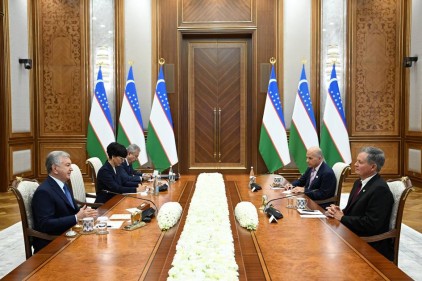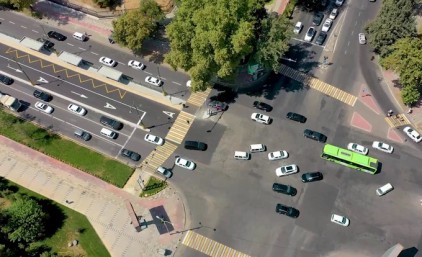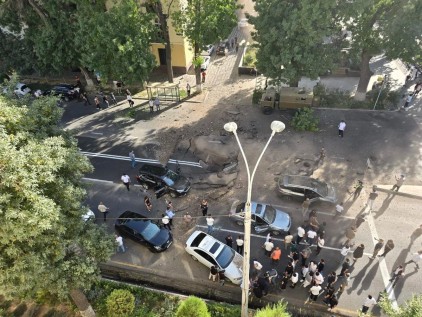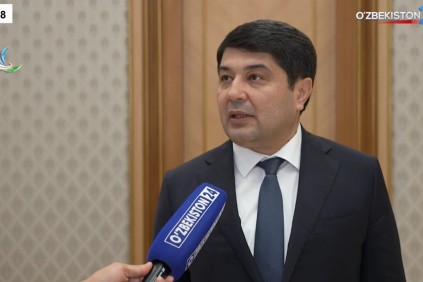
In an interview to Uzbekistan 24 TV channel, the Tashkent mayor Shavkat Umurzakov shed light on the presentation made to the president on one of the capital's most pressing issues—street and road congestion and its impact on the environment.
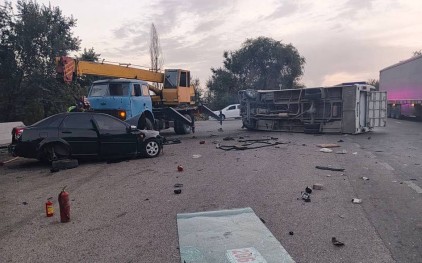
According to him, the congestion is partially due to the sharp increase in the number of vehicles.
"Tashkent roads are designed for 400,000 vehicles, but nowadays there are over 1 million vehicles on the streets, he noted, adding that his office had studied the experience of global megacities—Seoul, Singapore, Shenzhen, Dubai, and Moscow—and had concluded that an integrated approach was necessary.
"Now, six organizations from six different areas are involved in road management in our country,... Due to management not being centralized, there has been no clear strategy for road infrastructure development," he said.
In all provinces of Uzbekistan, numerous entities manage the transportation system (traffic lights, asphalt, road markings, parking, public transportation, routes, transfer hubs, taxis, sidewalks, bike paths, cameras, accident analysis, and so on), and their actions are sometimes unsynchronized, with the sector also regulated by a large number of different legal documents.
Unified Traffic Management Center and Master Plan
The mayor emphasized that international practice demonstrateв the effectiveness of a unified Traffic Management Center (TMC).
"Each megacity has a unified traffic management center, to which all relevant duties are delegated. Once it is set up, the first goal will be to develop a master plan for Tashkent's transport system," he stated.
The master plan, according to Shavkat Umurzakov, must take into account the needs of all traffic participants—commuters, users of micromobility vehicles (bicycles, electric scooters, and others), freight transport, and drivers.
"We need to identify on which streets and at what times trucks should travel; we need to ensure conditions for micromobility... Today, a person can't travel 5 km on an electric scooter or bicycle and get to their destination without hustle. This requires calculations," he noted.
The mayor added that the city still lacked clear calculations that would guarantee that public transportation will get passengers there faster than a private car.
Digitalization and Congestion Reduction
Shavkat Umurzakov announced that street development and repairs would be based on a master plan.
"This will be a unified program. Every citizen, tourist, and city guest will be able to download the app and see exactly how to get to their destination faster. If repairs are planned, a notice will be sent in advance and an alternative route will be suggested," he said.
According to him, all these solutions are impossible without digitalization. "Once the problems are identified within the master plan, solutions and control mechanisms will emerge through digitalization. This will ensure transparency and speed," he emphasized.
Shavkat Umurzakov also stated that the creation of a single center would significantly reduce traffic congestion. "If this center is created and begins to perform its functions, traffic congestion will be reduced by at least 30-40%," he said.
In addition to reducing traffic congestion, the project could reduce environmental impacts. "These changes will help solve the second key environmental issue: reducing dust loads and harmful emissions from vehicles by approximately 15%," the head of the capital's administration noted.
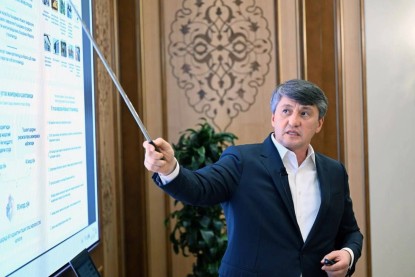
The mayor’s office presented the Traffic Management Center project to the president in March 2024. At that time, it was reported that virtually all of the capital's streets did not meet modern technical requirements. Since then, the first express bus line, a paid parking system, and a number of other projects have been launched in the capital.
What will the Traffic Management Center do? According to the office, these include:
- analysis and modeling of traffic and pedestrian flows;
- implementation and management of an intelligent transportation system (ITS);
- development and implementation of a transportation master plan and framework;
- organization of urban parking;
- development of electric vehicle charging infrastructure;
- incentives for the use of personal mobility devices, and more.