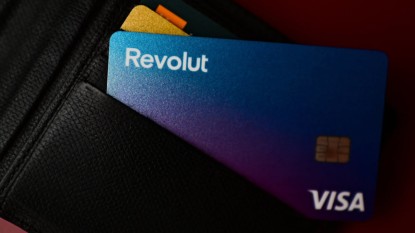
Russians living in the EU reported that they were unable to top up their Revolut accounts using bank cards issued the Central Asian countries—Kazakhstan, Uzbekistan, and Tajikistan. Revolut rejected the money transfer, explaining that "the source card is no longer supported."
Revolut's customer support team explained to Russian customers contacted by Oninvest that, as of December 1, 2025, the neobank will no longer process top-up transactions from cards issued in Kazakhstan, Uzbekistan, and Tajikistan for clients residing in the EU. The bank also clarified that this issue is not temporary: "any similar future transactions" will not be processed.
None of the banks whose cards users attempted to use are subject to sanctions.
Revolut cited its own Terms and Conditions, as well as the updated compliance policies of international payment systems, which Revolut is required to adhere to, as justification for denying the transfer. According to these policies, some countries have been designated by international payment systems as high-risk for card deposits. Customer communications with Revolut support (Oninvest has reviewed screenshots of these conversations) indicate that Kazakhstan, Uzbekistan, and Tajikistan are among these countries.
"This is not a decision Revolut made independently, but rather a necessary compliance with the requirements of our payment processing partners," Revolut support said.
Users were also unable to top up their Revolut accounts from mobile apps of CIS banks: the banking apps returned an error message when attempting to complete the transaction.
Two Revolut customers living in France received a letter from the neobank informing them that they were unable to deposit funds into their accounts from cards issued by banks in 52 countries. Specifically, this applies to countries where Russians relocated en masse after 2022: Armenia, Azerbaijan, Georgia, Kazakhstan, Kyrgyzstan, Uzbekistan, Turkey, the UAE, Serbia, and Israel. The ban also applies to cards issued by banks in popular resort destinations such as Thailand, Cuba, Vietnam, and others. Monaco is also on the list of countries.
Following the adoption of the 19th EU sanctions package, Russians legally residing in the European Union began to face new restrictions in the financial services sector. Specifically, it banned European banks from processing payments, acquiring, and conducting transactions with electronic money and cryptocurrencies for citizens of Russia and Belarus, as well as companies from these countries.