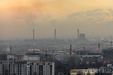
Tashkent recorded a brief, sharp spike in airborne particulate pollution on the evening of Sept. 18, with PM2.5 (particles up to 2.5 micrometers in diameter) and especially PM10 (up to 10 micrometers) surging, the National Committee for Ecology and Climate Change said, citing the special commission on improving the capital's environmental situation.
Automated monitoring stations showed concentrations began climbing after 6 p.m. and rose markedly after 8 p.m. Pollution peaked between 9 and 11 p.m. At 10 p.m., the citywide average concentration of PM2.5 was 74.5 micrograms per cubic meter (µg/m³) and PM10 was 243.6 µg/m³. PM10 reached as high as 555.3 µg/m³ at some locations.
For reference, the national daily limit for PM10 is 75 µg/m³ (annual: 500) and for PM2.5 is 60 µg/m³ (annual: 35).
PM10 levels far above PM2.5 point to a larger share of coarse dust in the air during the episode.
Overnight into Sept. 19, specialists from the National Center for Environmental Monitoring and the Uzhydromet weather service took air quality readings with mobile equipment at three locations in Mirzo-Ulugbek district. At 2:15 a.m. in the Feruza neighborhood, they measured PM2.5 at 65 µg/m³, PM10 at 77 µg/m³ and total dust at 90 µg/m³. At 2:25 a.m. on Kasaba Street, PM2.5 stood at 55 µg/m³, PM10 at 63 µg/m³ and total dust at 70 µg/m³. At 3:01 a.m. on Parkent Street, the readings were 61 µg/m³ for PM2.5, 65 µg/m³ for PM10 and 70 µg/m³ for total dust.
The teams also monitored gaseous pollutants including nitrogen dioxide, carbon monoxide, ammonia, hydrogen fluoride, phenol and formaldehyde. Peak single-measurement concentrations of all substances tested stayed within limits, according to the analysis.
"Several factors appear to have contributed at once," the committee said. "A prolonged dry spell allowed dust to be lifted from soil and road surfaces into the air. A temperature inversion and weak air circulation in the evening and overnight hours then trapped particles near the ground."
Data from the European Copernicus Atmosphere Monitoring Service (CAMS) model also showed dust masses with high PM10 concentrations over western and northwestern parts of the country. Calculations using the HYSPLIT (Hybrid Single-Particle Lagrangian Integrated Trajectory) model indicated that air flows reached Tashkent from the north, northeast, west and northwest at various altitudes.
After 11 p.m., PM2.5 and PM10 concentrations began to fall gradually. By 4 a.m. on Sept. 19, the citywide averages had dropped to 22.4 µg/m³ for PM2.5 and 61.9 µg/m³ for PM10.
"The situation seen in Tashkent on the evening of Sept. 18 and overnight into Sept. 19 was therefore a short-lived dust episode," the committee said. "Dry weather, local dust, a temperature inversion and weak air exchange created conditions for its formation. The decline in concentrations at automated stations after 11 p.m., along with the field measurements taken between 2:15 and 3:01 a.m., indicates the episode was gradually easing."
Forecasts suggest air quality in Tashkent could temporarily worsen between 9 p.m. on Sept. 19 and 4 a.m. on Sept. 20, with the air quality index (AQI) potentially reaching 101–150, a rating of "unhealthy for sensitive groups." The polluted air mass is expected to shift southwest on Sunday morning, and air quality should return to "moderate" by 8–9 a.m.