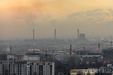
IQAir, an international air quality monitoring company, has released its global data on pollution from fine particulate matter PM2.5 (particles up to 2.5 microns in diameter) for 2025. The study covered 143 countries. Uzbekistan ranked among the 10 most polluted. Its concentration of fine dust stood at 38.1 micrograms per cubic meter, eight times the level recommended by the World Health Organization (WHO).
Three other Central Asian countries also made the list of the 30 most polluted on this measure. Among its neighbors in the region, Kazakhstan had the best result, ranking 29th. The concentration of fine dust in Kazakhstan's cities was 23.4 micrograms per cubic meter, four times the WHO standard. Tajikistan recorded the worst reading in Central Asia in 2025, at 57.3 micrograms per cubic meter, ten times the WHO norm. Kyrgyzstan ranked 19th, with pollutant concentrations six times the WHO norm. No data were submitted for Turkmenistan.
Pakistan had the worst air in the world, with a concentration ten times the WHO standard, at 67.3 micrograms per cubic meter. According to the source, the five most polluted countries also include Bangladesh (66.1), Tajikistan (57.3), Chad (53.6) and the Democratic Republic of Congo (50.2). What these countries share is that conditions have remained at an extremely poor level in recent years, with high pollution readings.
Economically developed countries in Europe and the United States posted the best results, with the lowest PM2.5 concentrations. In recent years many of them have been in the clean zones of the ranking, blue and green, which denote PM2.5 levels at or below the WHO standard. The island territory of French Polynesia ranked first as the country with the cleanest air, at 1.8 micrograms per cubic meter.