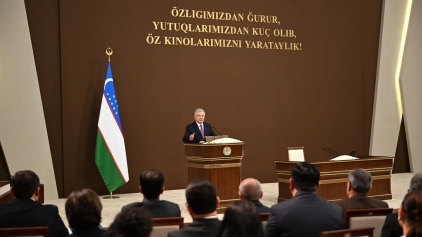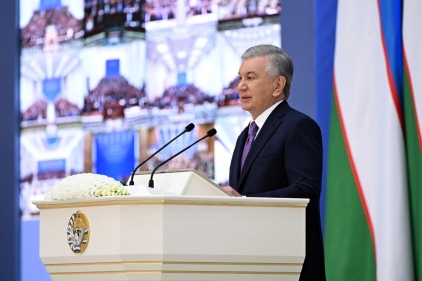
Uzbekistan plans to attract doctors who have worked at foreign clinics, President Shavkat Mirziyoyev said today at a meeting with health care and pharmaceutical workers, according to his spokesman, Sherzod Asadov.
“We will create a new system that will allow us to bring them into our hospitals and help them build their own medical schools in New Uzbekistan,” the president said.
These specialists will receive supplements of up to 50 million soums to their monthly salaries. Their workplaces will be equipped with modern medical equipment, and they will be able to choose their own teams of doctors, assistants and nurses. The state will also cover the cost of attending prestigious international conferences and exchanging experience with colleagues abroad.
The program will initially cover 26 national specialized medical centers. Their directors have been instructed to recruit five to 10 compatriot doctors with experience abroad in 2027, which could bring in 130 to 260 specialists if the target is met.
Higher supplements for doctors in remote districts
Separate measures target medical staffing in remote settlements. From 2027, the monthly supplement for all doctors working in remote districts will rise from 2 million to 4.5 million soums, the president said. Doctors taking jobs in such districts will also receive a one-time payment of 50 million soums.
Previously, a monthly supplement of 2 million soums applied to doctors at family polyclinics and family doctor stations in remote and hard-to-reach districts, under a presidential resolution dated April 25, 2022.
Mortgage support for health workers
The president also announced wider housing support. The government has allocated 50 billion soums to cover part of the mortgage loans of staff with at least 15 years in the health care system, and 1,000 health workers are expected to buy homes with this support in 2027.
Support will extend to young specialists: each year, 25% of the down payment on a mortgage will be covered for 500 young health workers.
In November 2025, the president signed a resolution on support for medical and pharmaceutical workers. Among other things, it covered 25% of the mortgage down payment for 500 workers at state medical facilities with at least 15 years’ service.
Heads of medical associations to be elected for two- to three-year terms
The president also criticized the work of some professional medical associations. He said some groups lack the drive to renew themselves and that a number are led by the same people for many years, which limits opportunities for other specialists. In his view, associations should do more to help members train abroad and to adopt modern treatment methods.
A recent decree gave professional associations additional powers. The plan now is to move to a system in which members elect association heads for terms of no more than two to three years.
“I think it would be right for the associations to hold their congresses, elect leaders who will bring a new atmosphere, ‘new blood,’ to the system, and get on with transforming the sector,” Mirziyoyev said.
National community of medical innovators created
The president announced the creation of a National Medical Innovators community. The new platform is meant to bring together students, young doctors, scientists, experienced mentors and compatriots working abroad.
“I believe great doctors, scientists and pioneers of the future will grow up among you. Our task is to identify such talent, believe in it and create opportunities for it to realize its dreams,” he said.
Overhaul of doctor training and new supplements
Eleven state universities train 15,000 doctors a year, the president said, but not every graduate has enough practical skill to treat patients independently on starting work.
“No matter how many modern clinics we build or how much cutting-edge equipment we buy, without qualified staff there will be no results,” he said.
He said the quality of training directly affects patient safety.
“In other fields, a young employee can make a mistake, but a future doctor has no right to. Behind every action of a medical worker stands a human life,” Mirziyoyev said.
Medical training will therefore be tied more closely to clinical practice. From 2027, medical students will spend three days a week learning to work with patients, and final-year students will complete full practical placements in medical facilities.
Supplements for health workers
The president announced additional payments for certain categories of health workers:
- 1.5 million soums for nurses with bachelor’s degrees
- 2.5 million soums for health workers with master’s degrees
- 5.5 million soums for specialists in family medicine
The announcement did not say when the supplements would take effect or what additional conditions would apply.
Free residency and a 3 million soum stipend
From 2027, residency training in narrow medical specialties at universities will be free, and students will receive a stipend of 3 million soums. Depending on the specialty, residency will last two to five years: two for family medicine and five for surgery. Medical universities are already implementing a “university clinics” system that attaches clinics to universities.
The president said 80% of medical research should be conducted in university clinics, with a focus on more accurate diagnosis, more effective treatment and fewer complications.
New standards for polyclinics
Mirziyoyev announced the implementation of “Medical Standards of New Uzbekistan,” covering medical education, construction and equipping of facilities, sanitary requirements, patient safety and service culture.
“Anyone coming to a polyclinic should first of all see cleanliness, order and a culture of service,” the president said.
Primary care staff will be given work clothing free of charge, in stages. Material incentives will also be expanded. In 2026, provincial competitions for best district-level doctor and best nurse are being held for the first time, with winners receiving 30 million soums each. In 2027, 14 doctors who win at the provincial stage will be awarded electric cars. Authors of the ten best projects promoting healthy lifestyles will receive grants of 200 million soums.
State award named for Ibn Sina
The president proposed establishing a state award named for Abu Ali ibn Sina (Avicenna) to honor health workers who distinguish themselves in protecting public health and in applying scientific advances and modern treatment methods.
More than 800,000 people work in the country’s medical and pharmaceutical sectors, he said. He recently signed a decree awarding state honors to industry representatives, including doctors, entrepreneurs and foreign partners, and presented the awards at the meeting.
In September, the president was presented with proposals to reform medical and pharmaceutical education. From the 2027-2028 academic year, the current “Lechebnoye delo” (medical care) track would be replaced by a six-year bachelor’s program in general medicine, followed by a year of practical training after the fifth year. The proposals also call for a single electronic register of medical and pharmaceutical workers covering their education, qualifications and professional record. State registration of specialists would be voluntary from 2027 and mandatory from 2030.
Guaranteed care package to expand
From 2027, the number of free drugs in the guaranteed care package for outpatients will rise from 69 to 73, and the number of types of examinations will reach 36. Of the 69 drugs now provided free at polyclinics, 28 are issued under a reimbursement program, a figure due to grow to 69 from 2027. In February 2025, a Health Ministry representative said the guaranteed volume at neighborhood polyclinics included 28 diagnostic studies and 22 laboratory tests.
A program for early detection of stomach, colon, prostate and lung cancer will begin in Samarkand and be extended to all provinces from 2028, the president said, with 700 billion soums allocated annually. Early diagnosis programs for diabetes, tuberculosis, cardiovascular disease, tumors in women and childhood blood cancers will continue.
Heart attack and stroke program
The president reported results from a program for early detection and treatment of heart attacks and strokes in Andijan, Fergana, Namangan, Samarkand and Tashkent. By his figures, deaths from these conditions at early stages fell 15% in five months. Care delivered within the “golden hour,” the critical period after first symptoms, prevented premature death or serious complications for 855 people.
In 2027, 280 billion soums is planned to expand the program to all districts and cities.
New model for polyclinics
“I always say: the better primary care works, the healthier our people will be,” Mirziyoyev said.
A new model of primary care has already been tested in 28 districts, he said. There, 7 million residents have been personally assigned to family doctors, and the obligations of patients and health workers are set out in mutual agreements. New laboratories have opened, doctors and nurses have been trained, and patient pathways have been drawn up, setting out how people obtain tests and care. In the president’s assessment, the changes have raised public trust in polyclinics. From 2027, the model is to be implemented in 100 more districts.
Medical infrastructure
Over the past decade, new polyclinics and hospitals serving 10 million people have been commissioned and 58,000 new hospital beds created, the president said. Thanks to the expanding network of modern facilities and the growth of the private sector, the volume of medical services has tripled.
The country now performs more than 100 types of complex procedures once carried out abroad, including surgery for congenital heart defects, organ transplants, robotic operations and complex neurosurgery.
“To see their family happy, to work honestly, to reach their goals and to live a life with meaning, a person above all needs health. That is why we have made preserving people’s health one of the most important areas of our reforms,” the president said.
State registration of health workers to begin July 1, 2027
Registered doctors and pharmacists will receive pay supplements.
“In a field that affects public health, there must be clear order and strict control, and only professionals should practice in it,” the president said.
The system was preceded by long preparation, including study of international experience, he said. Registration will be voluntary at first and mandatory from 2030. Registered doctors and pharmacists will receive supplements of 7 million soums, and nurses 3.5 million soums.
Government Resolution No. 577 of Oct. 19, 2026 sets out the procedure. From July 1, 2027, to Jan. 1, 2030, registration will be voluntary, granted either on passing a special exam or automatically when a qualification category is awarded. From 2030, only registered specialists will be able to practice in their medical or pharmaceutical specialty. Registration will be valid for five years and then must be renewed. The Center for Qualification Assessment of Medical and Pharmaceutical Workers is the authorized body. Health workers with an academic degree and at least 20 years’ experience in their specialty can be registered without an exam if they meet set conditions. Applications can be made through public service centers, the Unified Portal of Interactive Public Services or a dedicated medical platform.
Pay to be tied to KPIs
The president also ordered that mechanisms for patients to rate hospitals and polyclinics be implemented from 2027, covering national, provincial and district facilities. Pay for each doctor and nurse is to be linked to key performance indicators, with public satisfaction with the quality of care as the main criterion. How ratings will be collected, how KPIs will be calculated and what share of pay will depend on them was not specified.
Management of specialized facilities will also change. From 2027, the directors of the 26 specialized centers will move to one-year contracts, each with specific commitments to implement new treatment methods, upgrade the skills of primary care staff and put research into practice. Specialists from foreign university clinics will be brought in to assess the centers’ work. Directors will report to the public at year-end, and renewal of their contracts will depend on results.
State to pay for upskilling of 130,000 health workers
“Medical workers must constantly work on themselves and not fall behind new developments!” Mirziyoyev said.
Private organizations will play a bigger role in training, and health workers will be able to choose the institutions where they upgrade their skills. The state will bear the training costs of primary care and district medical staff. By the estimate given at the meeting, this will save 130,000 district health workers a combined 100 billion soums a year.
Ten artificial intelligence systems for medicine
From 2027, ten artificial intelligence systems are planned to be deployed in health care, including in cardiology, hepatology, ophthalmology and hematology.
“New solutions will be implemented for remote patient monitoring, detecting diseases from speech and monitoring drug safety,” the president said.
The technology is expected to widen doctors’ diagnostic and treatment capabilities. Each province will also hold “Best IT Operator” and “Best Digital Medicine Doctor” competitions, with winners receiving 100 million soums each.
State hospitals to buy services from private providers
State hospitals will buy hemodialysis, laboratory testing, rehabilitation and other services from the private sector. The number of private clinics has grown from 3,500 in 2017 to more than 9,000, the president said. The private sector already supplies a large share of services in some fields: 90% in dentistry, 70% in diagnostics and 60% in otolaryngology, urology and ophthalmology.
Development remains uneven. In Andijan, Fergana, Namangan and Samarkand provinces and in Tashkent, 35% to 40% of private clinics have inpatient beds. In Karakalpakstan and Syrdarya, Jizzakh and Navoi provinces, the figure is below 15%. Private participation in rehabilitation, nephrology, oncology, neurosurgery, psychiatry, addiction treatment and obstetrics also remains below expected levels. These areas will get priority.
The president announced a phased move to buying services from the private sector, along with new outsourcing mechanisms. Entrepreneurs will be given space in state hospitals to install modern equipment, and private companies will provide services on state facilities’ premises, paid through the health insurance system. The state plans to buy services including hemodialysis, laboratory testing, sterilization of medical equipment, rehabilitation and physiotherapy. Information on market needs and funding terms will be published in each province so entrepreneurs can assess investment opportunities.
Background: contracts of up to five years
On Oct. 26, the president was presented with a draft resolution on expanding private-sector participation in health care. It would allow service contracts of up to five years instead of the current one-year agreements, so private companies can invest in equipment and infrastructure with a chance to recoup the cost. Under the proposed model, a state facility buys the service while the private company purchases, operates and updates the equipment at its own expense. Also under consideration are unified tender documentation, an electronic procurement system and the handover of some medical institutions to professional management companies. The president ordered the proposals refined and implemented in stages.
Land plots for private clinics
Local governors will each year identify and publish lists of land plots for building private clinics. The plots will be auctioned exclusively for medical facilities and offered on preferential terms. The details of the benefits and the allocation procedure have not been specified.
Hospitals to be built under master plans
The president also called for more rational siting of medical facilities. Population growth and the construction of new cities and housing areas call for long-term infrastructure planning. Without it, some districts face a shortage of hospitals while others underuse existing capacity.
“From now on, new medical facilities will be created on the basis of master plans, taking into account population size and territorial location,” the president said.
The president was also briefed on the results of an inventory of medical infrastructure in ten provinces, which found 3,499 health care sites, 494 more than in Cadastre Agency data. It was proposed to complete the inventory in all provinces, create electronic passports for facilities and set up a single digital property register for the sector. The master plan is to provide for redistributing medical infrastructure and bringing services closer to residents.
In November 2025, the president noted that private clinics charge less than national centers and ordered a review of prices at state facilities. If similar services are cheaper and better at private clinics, health insurance funds will be directed there. On Nov. 4, the government approved rules for providing budget-funded medical care at state and private facilities. Under the rules, care is provided on the basis of an electronic referral with a QR code, which lets the patient choose a state or private facility for planned inpatient treatment.