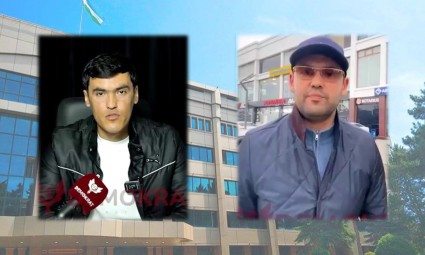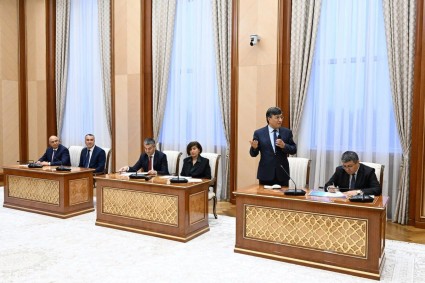
Presentation on reforming of technical regulation was made to the president on Thursday. Owner, founder of Korzinka grocery chain/chairman of Trade and Service Association, Zafar Khashimov underscored the importance of business participation in reform discussions.
"Consulting us, businesses, is, in my opinion, a very good decision, because these documents must be reviewed comprehensively, including by businesses," he told the Uzbekistan 24 television channel.
According to him, the current system requires preliminary check before products enter the market.
"This is check that is made before any good enters the market. What does this mean today? A company can't enter the market until it gets a certificate," he underscored.
As an example, he cited baking of flatbreads: "We bake flatbreads in a tandoor and sprinkle them with sesame." And the public wishes us to sprinkle them with jizza (pieces of fat tail fat fried in their own fat – ed.), we'll have to spend six months getting certificates for each store."
He emphasized that the transition to the new model will reduce the burden on businesses and transaction costs, but will increase producer responsibility.
"If our bread doesn't turn out well and someone comes with a complaint, now we can say, 'We have a certificate. Who's responsible then? The state, not the business.' While in the new system, the entrepreneur takes responsibility, produces the product, and the market evaluates its quality," he stated.
According to Zafar Khashimov, this document has been thoroughly researched and has been in the works for months. He believes the proposed changes "would become the foundation for industrial modernization" and "a major step toward building a true market economy."
He added that the reform was "a platform for joining the World Trade Organization" and creates the foundation for transforming the entire economy.
"I have high hopes. If these decisions are passed following the presentation today, then, in my opinion, this will be a step for the industry comparable in significance to the opening of the currency conversion system," Khashimov stated.
CEO of Global Textile group of companies Muzaffar Razakov stated that the reform is being implemented at the initiative of the president and is aimed at liberalization and alignment with market principles.
"We are talking about removing barriers for doing business, lifting the largest obstacles to imports and exports, primarily in the area of certification and standardization," he said.
According to him, the transition to the new system means abolishing technical requirements that have been in place for 30-40 years and transferring responsibility to entrepreneurs. "The state will create a supervision system that does not interfere or cause harm, and the market itself will regulate quality," Muzaffar Razakov underscored.
He also emphasized that the reforms were being discussed with the participation of entrepreneurs, and their proposals are being taken into account when making decisions.
From Enterprise Control to Market Control
At the meeting, it was underscored that the current practice of inspecting businesses during product assessments is causing dissatisfaction among businesses. If violations are identified, inspectors often block the entire enterprise's operations, rather than the circulation of a specific batch of goods.
Developed countries employ a market control system based on risk analysis. The manufacturer declares product compliance with standards and bears full responsibility for its quality and safety.
Therefore, a gradual phase-out of state supervision and a transition to market surveillance mechanisms is planned. A separate bill, "On Market Control," has been prepared for this purpose.
Furthermore, the presentation has proposed to implement risk-based assessment, abolish mandatory certification for the remaining product categories, and gradually transition to declarations of conformity.
As part of the reforms, a new General Product Safety law is planned to be adopted.