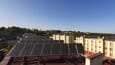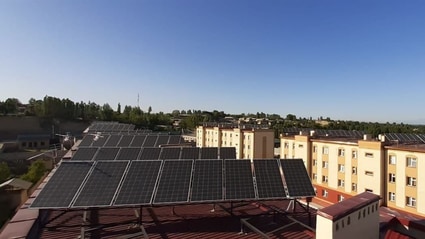
Uzbek households equipped with rooftop solar panels generated more than 330.8 billion soums in revenue by selling surplus electricity back to the national grid during the first half of 2026, according to the Tax Committee. This marks an approximate 5.3-fold increase compared to the same period last year.
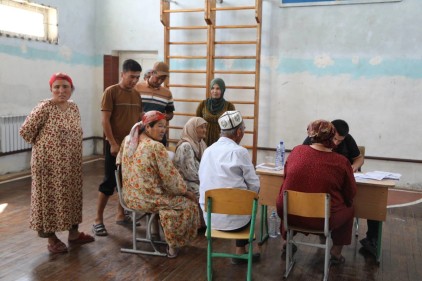
Data shows that during the first six months of the year, 68,600 individuals received subsidies totaling 330.82 billion soums under the government’s Quyoshli Xonadon (Solar Home) initiative. Payouts peaked in March, when 100.7 billion soums were distributed to 66,100 citizens.
By comparison, only 28,500 citizens received 63.5 billion soums in subsidies during the first half of 2025. Year-on-year, the number of program participants has grown nearly 2.4 times, while total payouts surged by almost 530%.
On a regional level, Bukhara led the country with 61.9 billion soums in distributed subsidies. The Khorezm province followed closely at 60.5 billion soums, while Karakalpakstan ranked third with 38.9 billion soums.
Launched on April 1, 2023, the Solar Home program provides incentive structures for individuals installing solar photovoltaic systems with a capacity of up to 50 kilowatts. Participants receive a state subsidy of 1,000 soums for every kilowatt-hour (kWh) of surplus electricity fed into the unified power grid.
Under the framework, if a household consumes 100 kWh from the grid in a month but its solar panels generate 500 kWh, the state pays 1,000 soums for each net kilowatt-hour supplied back to the grid. These funds are automatically transferred via the Soliq mobile app by the 25th day of the following month.
Stay up to date with all the latest news: