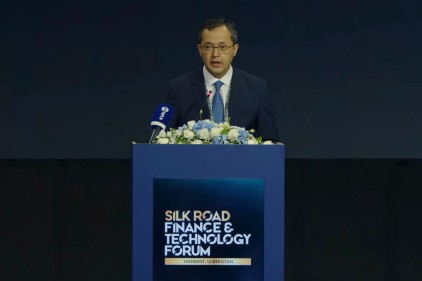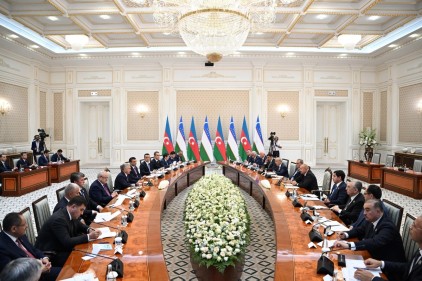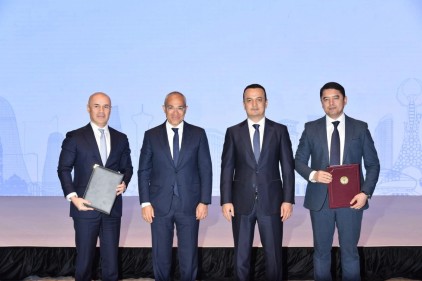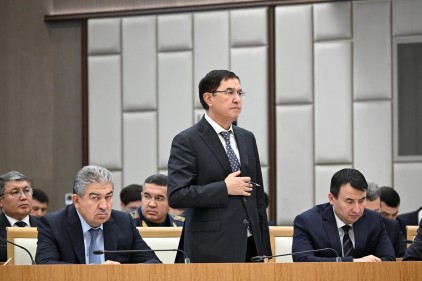
Uzbekistan aims to secure an investment-grade sovereign credit rating, complete its accession to the World Trade Organization, and continue reducing the state's footprint in the economy in the coming years, Deputy Prime Minister Jamshid Kuchkarov said today at the opening of the Silk Road Finance & Technology Forum in Tashkent.
According to the deputy prime minister, developing financial technology, attracting private capital, and introducing new financial instruments rank among the top priorities of Uzbekistan's economic policy.
"The successful development of any sector, including fintech, ultimately depends on stable and favorable macroeconomic conditions that lay the groundwork for sustainable growth and investment," Kuchkarov said.
He noted that Uzbekistan's economy has grown at an average annual rate of roughly 6-7% over the past decade. "Over that period, the size of our economy has tripled — GDP has grown from around $60 billion to $180 billion," he said, adding that GDP per capita rose from about $1,900 to $4,600 over the same period.
Kuchkarov said this growth has allowed Uzbekistan to move into the upper-middle-income country bracket.
Turning to inflation, the deputy prime minister said price growth has fallen to single digits after several years in double digits. "This year, inflation is expected to come in at around 6.5%, and our target is to bring it down to 5% next year," he said.
Kuchkarov added that external public debt remains at roughly 27% of GDP. "Maintaining fiscal discipline is a fundamental principle for us. In recent years, we have kept the budget deficit below 3% of GDP," he said, pointing also to improved external assessments of the economy, rising sovereign credit ratings, and growing inflows of foreign direct investment.
The deputy prime minister said authorities intend to maintain a "favorable and predictable environment" for investors and market participants over the next decade.
"We will take all necessary steps to bring inflation down to its target level, maintain fiscal discipline, and keep public debt at a reasonable and sustainable level," he said.
Among the government's further goals, Kuchkarov named securing an investment-grade sovereign credit rating for Uzbekistan. "We will work toward achieving an investment-grade sovereign credit rating, completing Uzbekistan's accession to the World Trade Organization, further reducing the state's presence in the economy, and continuing market reforms," he said.
He said these measures are meant to strengthen the private sector's role, deepen Uzbekistan's integration into the global economy, and expand opportunities for both domestic and foreign investors.
Kuchkarov said that, as part of its structural reform agenda, the government intends to build a modern, competitive and inclusive financial system integrated into the global economy.
"This should be a system in which technology lowers barriers, innovation is encouraged, and trust is protected," he said.
The deputy prime minister also pointed to plans to deepen regional and international cooperation and connectivity, saying that fintech development should support economic growth by accelerating the movement and allocation of capital, expanding access to financial services, and making more efficient use of financial resources.
"We are confident that the important proposals and initiatives put forward at this forum will lead to meaningful practical outcomes and create new opportunities for cooperation in the years ahead," Kuchkarov said.
Stay up to date with all the latest news: