The Central Asian countries have launched a project to address common environmental challenges, the "Contextualizing Water and Land Nexus" (CAWLN). The program aims to help governments slow water depletion and land degradation, improve water security in the region, and sustainably manage resources. It was launched on the sidelines of the 20th Conference of the Parties to the CITES Convention (CoP-20) in Samarkand on November 25.
The program is being implemented by the Food and Agriculture Organization of the United Nations (FAO) jointly with the environmental regulator of each Central Asian country. The Global Environment Facility (GEF) is the project donor.
It comprises seven projects: three regional projects covering all countries, and four national projects—one for each country.
Four key initiatives are being implemented in Uzbekistan:
- Integrated Water Resources Management in the Amu Darya, Zarafshan, and Panj Basins ($5.84 million) – modernizing monitoring, preserving environmental flows, and strengthening transboundary cooperation.
- Water Resources Management in the Syr Darya and Naryn Basins ($5 million) – improving the efficiency of water distribution and developing early warning systems.
- Supporting Ecosystem Services and Biodiversity ($5.6 million) – restoring degraded lands, promoting agroecological approaches, and conserving rare species and agrobiodiversity.
- Regional Initiative to Reduce Land Degradation ($2 million) – restoring lands in vulnerable ecosystems, introducing sustainable practices, and enhancing the climate resilience of local communities.
The total budget for the seven regional and national projects is $26 million.
Regional projects cover the Amu Darya, Syr Darya, Zarafshan, Panj, and Naryn river basins, as well as desert, steppe, mountain, and pasture areas, which are experiencing significant anthropogenic and climatic pressures.
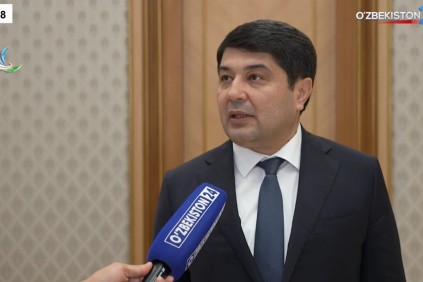
As FAO Vice-Chairman in Uzbekistan Sherzod Umarov noted, almost half of the region's land is already degraded, with annual economic losses estimated at $6 billion, and biodiversity declining by 5% annually. Climate change, water scarcity, and unsustainable land use practices are adding pressure.
The National Committee on Ecology and Climate Change will be FAO's primary strategic partner in Uzbekistan. However, given the broad scope of the program, close collaboration will also be established with other agencies, including the Ministries of Agriculture, Water Resources, and other relevant organizations.
Sherzod Umarov said that the program will be implemented using a unique and new model for the region—the Operational Partners Agreement (OPA). It envisions the actual implementation of projects being outsourced to third-party organizations with sufficient capacity and experience. These could be organizations such as the International Center for Agricultural Research in the Dry Areas (ICARDA) or the International Union for Conservation of Nature (IUCN). They will receive funding for implementation, while FAO and the National Committee on Ecology will coordinate and oversee the work.
According to Sherzod Umarov, this model was not chosen by chance:
"In recent years, international donors have been striving to transfer more responsibility to national partners in order to strengthen their institutional capacity. This includes enhancing competencies in procurement, accounting, HR procedures, and project management—so that national structures gradually reach the level of international standards. Thus, the program simultaneously achieves two objectives: implementing environmental projects and strengthening the capacity of government agencies."
FAO representative Ekrem Yucici said that the CAWLN program aims to increase the capacity of local institutions, demonstrate best practices, and provide access to innovative technologies and satellite data.
"When I was a child, we were told that water would one day be more expensive than oil. Water is already expensive now. In the future, it will become even more expensive. Therefore, countries need to protect key ecosystem services," Yusiji emphasized.
Rational land use—resource-saving agriculture, rotational grazing, and forest restoration—will bring sustainable economic benefits to people and countries in the medium and long terms.