Germany’s Federal Network Agency (BNetzA) is reviewing the activities of a German logistics company that, according to a Bild investigation, has been sending sanctioned goods to Russia in parcels via Uzbekistan’s state postal service.
“The agency is currently conducting a review,” BNetzA said in comments cited by the newspaper article published Sunday, January 25. The agency warned the firm could face consequences for improper cooperation with UzPost.
The report says Bild journalists, using a Berlin shop that sells Russian goods, sent five parcels to Russia containing sanctioned but non-working electronic components. The shipping manifest described the contents as “books, scarves and hats.” Each package contained a GPS tracker that showed the parcels ultimately arrived in Moscow.
Bild reports that when preparing the shipments, a store employee affixed labels from UzPost, Uzbekistan’s state postal service, even though it is not authorized to operate in Germany. The German company organizing the deliveries confirmed it works with UzPost, saying the cooperation is legal. UzPost also confirmed it collaborates with private logistics firms. The company denies any sanctions evasion.
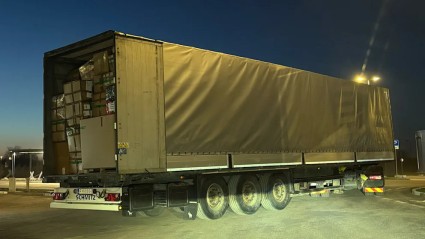
Reporters traced the route: 40-ton trucks carrying parcels leave Berlin for Poland, then go to Belarus and on to Moscow. The story says the packages crossed the Belarusian border - Belarus is also under sanctions - “almost without hindrance.”
Bild says the possible sanctions violations by this company came to light during a Berlin prosecutor’s investigation, ongoing since 2022, into the leadership of RusPost GmbH, the German subsidiary of Russian Post. According to the tabloid, German customs officers found prohibited electronic devices, cash and jewelry in parcels the firm was sending to Moscow. Bild writes that Berlin prosecutors intend to charge one top manager in connection with the case.
In addition, Bild reports the unnamed company that shipped sanctioned goods from Germany to Russia is currently led by Dmitry F., a former RusPost executive. Berlin prosecutors also investigated him, the report says but dropped the case in 2024 for lack of evidence.
UzPost’s Statement
The company stated that it "had not pursued or otherwise been not involved in shipment of sanctioned goods from Europe to Russia, and was not responsible for intentional illegal actions (inaccurate customs declarations) by senders."
"If German government authorities have any questions for Uzbekistan Post, we are ready to provide further clarification," the company added.
The statement said that the company had set up two Extraterritorial Offices of Exchange (ETOEs) in the Netherlands and the United States that to boost its e-commerce in accordance with the regulations of the Universal Postal Union (part of the UN).
To organize the ETOE in the Netherlands, UzPost entered into an contarct with the Dutch company PostPlus B.V., which, on behalf of the Uzbek company, handles the collection of postal items and transports them to the destination country. "As a rule, these items contain goods ordered from various marketplaces and online stores," the company noted.
"The provisions of the UPU regulations do not limit postal operators in terms of the territories where they—or their partners and users—can accept postal items for subsequent cross-border delivery. "Uzbekistan Post JSC may cooperate with partners, including private postal operators, who have the right to determine their own delivery mechanisms using various providers," the statement reads.
When accepting orders and compiling mail, ETOE operators are guided by internal receipt rules and policies for identifying sanctioned goods. Responsibility for correctly completing the declaration lies solely with the sender, the company added.
"The journalist intentionally committed illegal actions (inaccurately completing the customs declaration). Given the large mail volumes, identifying these test shipments with intentionally incorrectly completed documents is virtually impossible," UzPost added.
Had the journalist provided accurate information about the items being sent, the shipments would have been identified at the first stage of acceptance in accordance with the policy for identifying sanctioned goods, the company emphasized.
The operator stated that it had informed its partner, PostPlus, of the list of sanctioned goods for shipment to Russia, and that it is its responsibility to inform customers about such goods.
Uzbekiston Post confirmed that a BILD journalist had contacted them regarding the legality of using Uzbek documents on postal items. The company responded that the shipments originated from an UzPost foreign exchange office and that no violations were found in these actions.