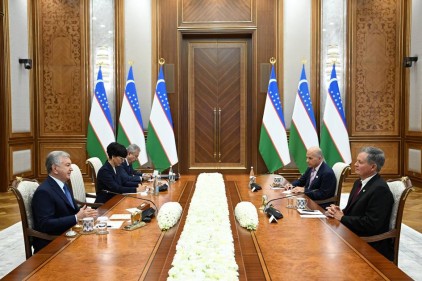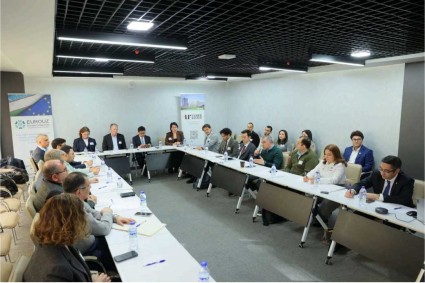
The European-Uzbek Association for Economic Cooperation (EUROUZ) convened the initiation meeting of its Infrastructure, Industry & Energy Committee (IIE-C), gathering representatives from over 30 member companies in a hybrid format.
The newly established IIE-C's primary goal is the collective coordination of EUROUZ members’ communication positions & common concerns in Uzbekistan. By fostering enhanced dialogue among EUROUZ members, European/international companies, and International Financial Institutions (IFIs), the Committee will aim to serve as a key mechanism for consolidating common positions toward external and public sector stakeholders in vital economic sectors. Its launch underscores the necessity for systematic dialogue with government to resolve fragmented communication and improve regulatory predictability, thereby supporting government agencies in effective policy implementation by providing a clear, collective international business perspective.
During the session, the Committee’s mandate was presented, covering three core pillars:
- Infrastructure: transport, logistics, utilities, and social infrastructure.
- Industry: localisation, industrial development, value chains, and competitiveness.
- Energy: energy security, sector reform, renewables, grids, and tariff policy.
Participants endorsed the proposed framework and shared additional directions for the committee strategy, which will be integrated and further refined ahead of the Committee's first public event in Q2, 2026.
Discussion centered on areas where the Committee can provide collective expertise, including enhanced coordination in infrastructure planning and execution, and leveraging expertise in project structuring and Public-Private Partnership (PPP) mechanisms. Participants agreed that a sustained, enhanced coordination among government agencies, business, and financial institutions is essential to maximize the positive impact of ongoing reforms.
An interactive stakeholder mapping identified key external entities, confirming, among others, intent on close cooperation with the FIC’s Energy Working Group, building on previous meetings and engagements with the Foreign Investors Council under the President of Uzbekistan.
Practical feedback of members also highlighted the complexity of engaging with government stakeholders and navigating PPP frameworks, emphasizing the need for improved inter-agency coordination and enhanced dialogue to ensure a high-quality public output.
2026 Priority Themes identified:
- Transport and logistics infrastructure development.
- Industrial upgrading and localisation, including public utilities.
- Energy sector reform, renewables, and grid modernisation.
- PPP frameworks, financing, and risk allocation.
- ESG, decarbonisation, and operational safety (as cross-cutting priorities).
The meeting concluded with a discussion on a provisional governance structure. The Secretariat confirmed it will circulate a stakeholder engagement matrix and management structure proposal, with the next meeting planned in an expanded format including government and international institution representatives.