Subsidies owed to individuals for solar energy generated and fed back into the national power grid are facing severe delays. Neither the Ministry of Energy nor the Ministry of Economy and Finance has provided a clear explanation for the situation. While the approved 2026 state budget allocates 100 billion soums to finance these expenses, this funding could turn out to be three times less than what is actually required to cover real costs.
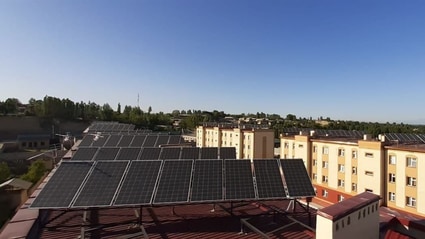
Uzbekistan launched the "Quyoshli Xonadon" (Sunny Home) program on April 1, 2023. Under the initiative, individuals who install solar photovoltaic systems with a capacity of up to 50 kW receive a state subsidy of 1,000 soums for every kilowatt-hour (kWh) of surplus electricity delivered to the unified power grid.
For instance, if you draw 100 kWh from the grid during a month, but your solar panels generate 500 kWh, you create a net positive surplus. If your total output fed into the grid exceeds what you consumed by the end of the month, the government is legally required to pay a subsidy of 1,000 soums for each kWh of that positive difference. These funds are mandated to be disbursed via the "Soliq" mobile app by the 25th day of the following month.
When questioned about the delays, the press service of the Ministry of Economy and Finance stated that work is underway to resolve the matter and that official information will be released shortly.
It is worth noting that delayed subsidies are not just a financial problem; they erode public trust in the entire system. When citizens fail to pay for electricity upfront, they are disconnected from the grid immediately. The same level of accountability should apply to government payments. The "Solar Home" project is an essential, forward-looking program for Uzbekistan's energy framework. Unfortunately, poor execution and bureaucratic negligence are tarnishing an otherwise excellent initiative.
Stay up to date with all the latest news: