Uzbekistan sits deep in Central Asia, and its continental climate produces some of the widest seasonal swings of any country on the historic Silk Road. Summers across much of the country are hot and dry, spring and autumn are generally mild and pleasant, and winter brings noticeably colder days in some regions, especially in the north and at higher elevations. Weather can also differ from city to city, and even within a single day, since desert lowlands, river valleys, and mountain foothills each behave differently. For anyone putting together an itinerary — whether a visitor arriving for a week of sightseeing or a resident traveling between cities for work — these differences are worth factoring into the plan from the start.
Because conditions can vary so much between regions, checking a general national forecast is often not enough. Before planning a route, travelers can check city-based forecasts at ob-havo-uz.com, which allows a quick comparison of expected temperatures and conditions in different parts of the country ahead of a trip. A short check like this, done a few days before departure and again closer to the date, can make a noticeable difference in how a trip actually unfolds.
Why weather matters before traveling in Uzbekistan
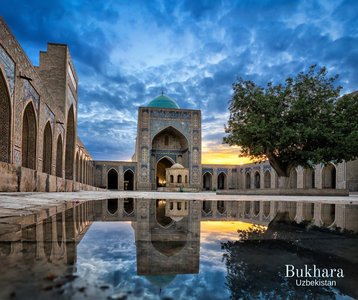
Much of Uzbekistan's tourism is built around walking — through the Registan in Samarkand, the old city of Bukhara, or the walled town of Khiva. All of these are best explored on foot, often for several hours at a time, which makes temperature, sun exposure, and wind far more relevant than they might be for a trip built around cars or buses. Weather also shapes transport comfort on longer overland routes, where heat, dust, or cold can affect how a multi-hour train or car journey feels. It influences what to pack, from sun protection and light fabrics in summer to warmer layers in winter. Photographers planning early morning or golden-hour shots at historic sites benefit from knowing whether haze, dust, or cloud cover is likely. And for families traveling with children or older relatives, knowing when the heat will peak in the day helps in scheduling rest breaks and indoor time.
Seasonal travel conditions
Spring (roughly March to May) and autumn (September to November) are generally considered the most comfortable periods for city walks and cultural tourism in Uzbekistan. Daytime temperatures tend to be moderate, and the light is often better for photography than in the hazier summer months. Summer (June to August) can bring intense heat across many parts of the country, with afternoon temperatures that make extended outdoor sightseeing uncomfortable in some cities; travelers in this season often shift the bulk of their walking to early morning or evening. Winter (December to February) is cooler and can suit short city trips, but conditions vary more from year to year and place to place — some days are mild, others bring cold snaps, fog, or precipitation — so it's worth checking local conditions rather than assuming winter travel will be uniform across the country.
Differences between cities
Tashkent, as the capital, tends to have a somewhat more moderate climate than the country's southern and western cities, though it can still see cold winter days and warm, humid stretches in summer. Samarkand and Bukhara sit further into the country's dry interior and typically experience hotter, drier summers along with cooler nights, particularly in winter. Khiva, in the far west near the Karakum desert, often sees some of the most extreme temperature swings in the country, both between seasons and between day and night. Mountain areas and foothills near cities like Tashkent can also differ sharply from the lowland plains — it's not unusual for snow to be falling in nearby hills while a city center stays mild. These differences mean that a forecast for one city shouldn't be assumed to apply to another, even when the cities are only a few hours apart by road.
How to use a weather forecast before a trip
A useful pre-trip check covers a few basics: expected high and low temperatures, wind conditions, the probability of rain, and any notable changes across the days of the trip. Temperature and rain probability affect clothing choices and whether waterproof layers are worth packing. Wind can matter for desert or open-air sites where dust is more noticeable. Daily forecasts help with timing — deciding, for example, whether to schedule a walking tour for early morning instead of midafternoon, or whether to build in extra time for a mountain route that might be affected by weather. Checking forecasts more than once, both when booking and again closer to departure, helps account for the fact that conditions can shift in the days leading up to a trip.
Weather in Uzbekistan is not uniform, and there is no single season or forecast that applies equally to every city and region. Taking a few minutes to check conditions city by city, ahead of both short trips and longer itineraries, is a practical step that supports more comfortable travel and better-informed planning — whether the trip is centered on Tashkent, Samarkand, Bukhara, Khiva, or destinations beyond them.