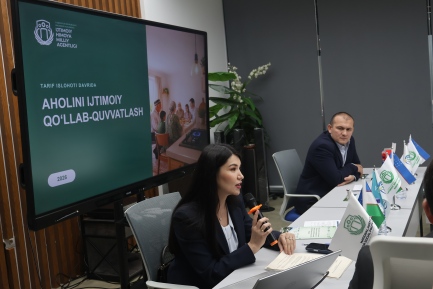
An information session on social support measures and opportunities to improve energy efficiency took place in Tashkent as part of the World Bank’s Innovative Carbon Resource Application for Energy Transition Project for Uzbekistan (iCRAFT) for energy sector reform.
The event was held in cooperation with the Center of Green Economy Projects under the Ministry of Economy and Finance, the National Agency for Social Protection under the President, the National Agency for Energy Efficiency under the Cabinet of Ministers, and the Yuksalish Movement. Representatives of government bodies, non-governmental organisations (NGOs), businesses and the media attended the session.
Participants discussed existing compensation arrangements for electricity and natural gas costs, proposals to expand support for vulnerable families, and government subsidies for the adoption of energy-efficient technologies.
Madina Azizova, Chief Specialist at the National Agency for Social Protection, outlined measures to support vulnerable families during tariff reforms, procedures for compensating electricity and natural gas costs and proposals to expand social assistance coverage.
A total of UZS 156.6 billion was allocated to compensation payments in 2025 and the first nine months of 2026, benefiting more than 470,000 families. Under the current arrangements, eligible families can receive a monthly compensation of up to UZS 37,500 for electricity and between UZS 135,000 and UZS 225,000 for natural gas, depending on the season.
Particular attention was given to proposals to strengthen social protection measures for the 2026–2027 autumn and winter season. These included plans to provide a one-off payment of UZS 1 million to each of 1,017,000 families, raise the income threshold for compensation eligibility from the current 1.5 to twice the minimum consumer expenditure level, and extend social assistance to an additional 166,000 families.
Participants also discussed proposals to extend electricity and natural gas compensation payments until 1 April 2028, to compensate costs related to coal purchases and liquefied gas, and to increase the baseline electricity consumption allowance from 200 to 350 kWh during the heating season in areas with limited or no access to natural gas.
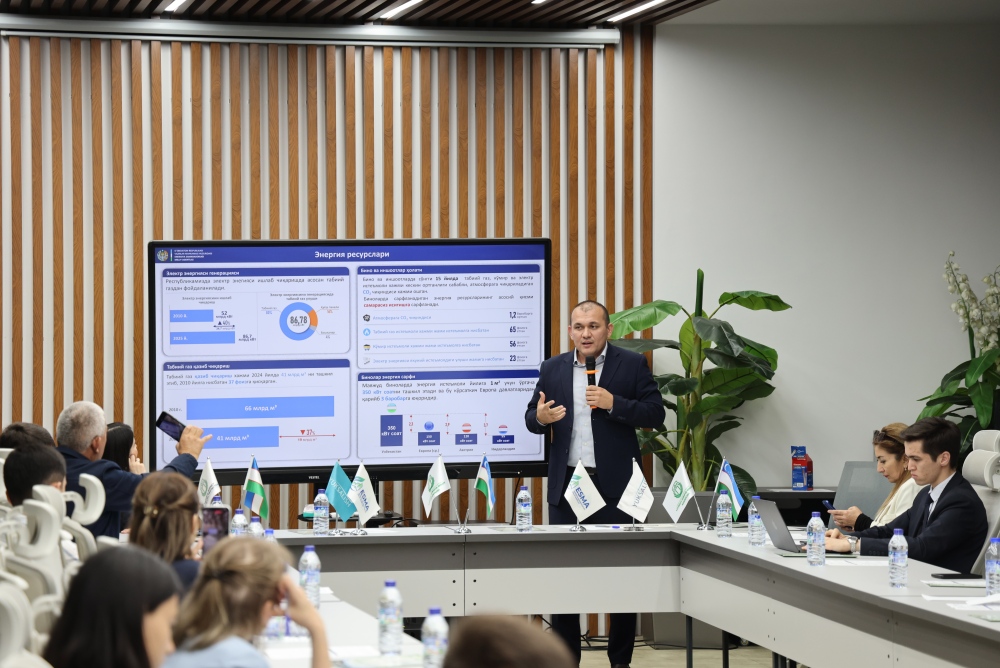
Obid Ahmedov, Head of Department at the National Agency for Energy Efficiency, presented the subsidies and financial incentives currently available for households and businesses to improve energy efficiency.
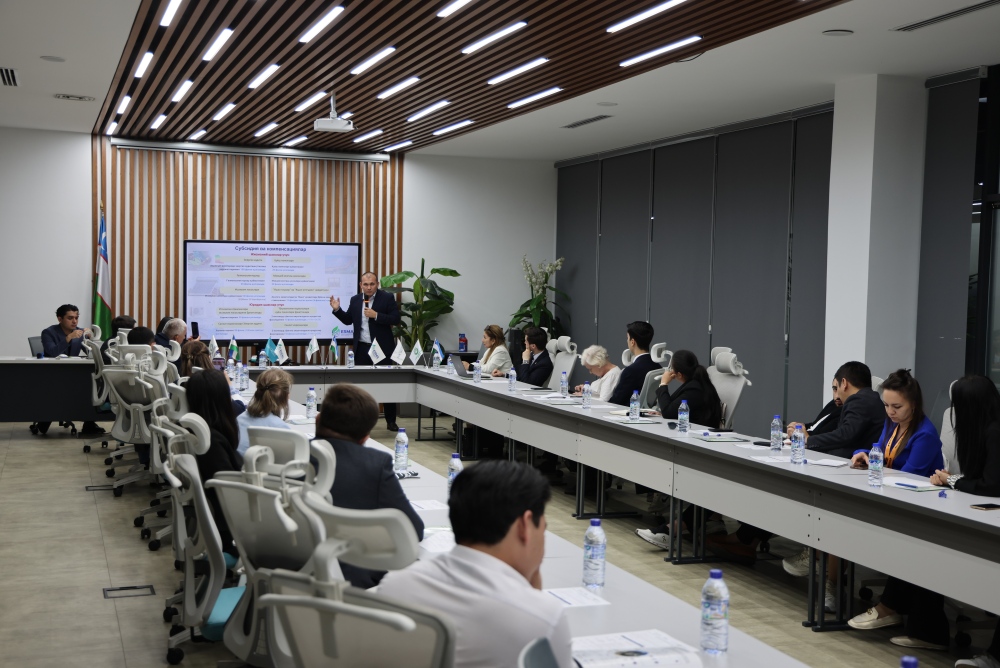
Existing support measures provide for full reimbursement of the cost of residential energy audits, and compensation covering 20% of the cost of solar panels and up to 40% of the cost of heat pumps. Financial incentives are also available to businesses for the adoption of renewable energy technologies and for conducting energy audits.
Shohijahon Xurramzoda, Head of Division within the iCRAFT project team, also took part in discussions on social support and energy efficiency. He emphasised the importance of cooperation between government bodies, civil society and other stakeholders.
An open discussion gave participants the opportunity to ask government representatives questions, raise practical difficulties encountered when applying for assistance and explore opportunities for future cooperation.
The session highlighted the need to raise public awareness of government assistance programmes, expand access to energy-efficient technologies and strengthen cooperation between government, civil society and business.