Uzbekistan has increased the ceiling on cash payments for goods and services and, for the first time, tied that threshold to an inflation-adjusted benchmark rather than a fixed sum — a change officials say responds directly to concerns raised by business leaders frustrated by a payment system deployed earlier this year as part of a broader campaign against the shadow economy.
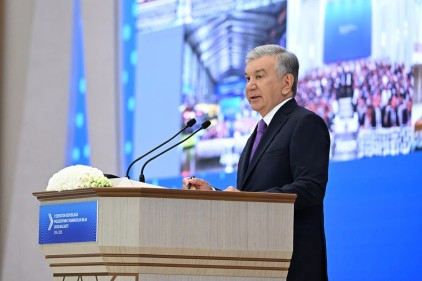
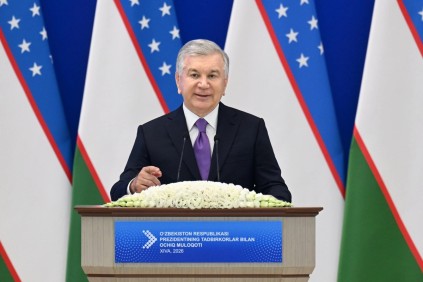
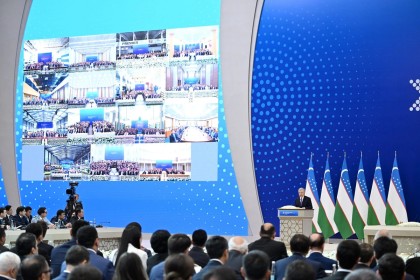
The adjustment stems from a presidential decree signed by Shavkat Mirziyoyev on August 27 and took effect the following day, fulfilling commitments made during the president's dialogue with the business leaders ahead of Doin Business Day.
From a fixed cap to a moving target
The change marks an evolution of a cash-restriction policy that has been in place since April 1, 2026, when a decree barred cash payments for any goods or services valued above 25 million soums. That step was part of a sweeping December 2025 president's Additional Measures to Promote Cashless Transactions and Reduce the Shadow Economy decree, which set ambitious national targets: shrinking the shadow economy's share of GDP by 1.3 times and raising the proportion of cashless payments in trade and services to 75 percent by 2030. Mirziyoyev has previously estimated that the shadow economy accounts for roughly 40 percent of Uzbekistan's economic activity — a figure that has made cashless-payment expansion a central plank of the government's economic reform agenda.
Under the new rules, however, the 25-million-soum cap has been replaced with a floating threshold defined as 400 times the base reference value (BRV) — a standard monetary reference figure the government revises periodically and uses across the tax and legal system. Because the BRV itself is scheduled to rise from 412,000 soums to 440,000 soums on September 1, the practical effect is a two-stage increase: the cash-payment ceiling stands at 164.8 million soums through the end of August, then automatically climbs to 176 million soums from September 1 onward.
By linking the threshold to the BRV rather than a static figure, the government has effectively built in automatic future adjustments, ensuring the cash limit rises in step with the benchmark rather than requiring a fresh decree each time inflation or policy erodes its real value — a structural fix that addresses a complaint common to fixed monetary thresholds in fast-changing economies.
Agriculture carved out, high-risk sectors still restricted
The revised rules leave two key features of the original policy untouched. Agricultural products remain fully exempt from the cash restriction, meaning farmers and buyers can conduct transactions of any size in cash — a carve-out that reflects the informal, often rural nature of Uzbekistan's agricultural trade and the practical difficulties of enforcing cashless requirements in that sector.
At the other end of the spectrum, a separate category of goods and services remains subject to mandatory cashless payment regardless of transaction size, reflecting the government's assessment of which sectors pose the greatest risk for tax evasion and informal dealing. These include:
- Services rendered by government agencies;
- Payments for electricity, natural gas and drinking water usage, except when made through bank teller windows;
- Alcohol and tobacco products;
- Sales of petroleum and gas products to the public through filling stations, along with electric vehicle charging services; and
- Real estate transactions, along with category M, N, O and G motor vehicles under ten years old, and specialized vehicles.
These categories — spanning utilities, government services, vice goods, fuel and big-ticket assets like property and cars — were also named in the original December 2025 decree as priority areas for eliminating informal cash dealing, given their outsized role in Uzbekistan's shadow economy.
Part of a broader pattern of business-driven reform
The revision is the latest example of a recurring dynamic in Uzbekistan's policymaking: broad economic reforms rolled out from the top, followed by targeted adjustments after businesses report friction on the ground. Like the bail-return and compensation reforms signed the same week, this decree traces its origins to the same open dialogue between Mirziyoyev and the business community — reinforcing the government's framing of that annual event as a direct feedback channel shaping national economic policy, not merely a ceremonial forum.
For businesses navigating the shift to a more cashless economy, the change offers modest but meaningful relief: a higher, automatically adjusting ceiling that better reflects real transaction values, even as the government presses ahead with its 2030 target of pushing three-quarters of all trade and services payments into digital channels.
Stay up to date with all the latest news: