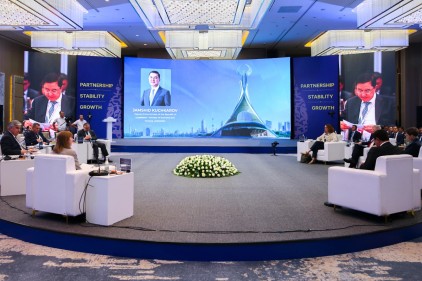
Regional connectivity is no longer just a matter of engineering and logistics; it has evolved into a cornerstone of sustainable economic growth. Deputy Prime Minister and Minister of Economy and Finance Jamshid Kuchkarov shared this insight today, June 29, at a seminar dedicated to regional cooperation for enhanced connectivity, private investment mobilization, and the expansion of open trade.
Kuchkarov noted that global uncertainty has become the "new normal" in recent years. He highlighted how the pandemic, geopolitical conflicts, supply chain disruptions, energy price volatility, and escalating trade disputes are collectively shaping a more fragmented global economy.
"The lesson of recent years, including for Uzbekistan, is perfectly clear: interconnected economies with diversified routes and open trade systems have proven to be the most resilient against external shocks," the Deputy Prime Minister emphasized.
He pointed out that modern connectivity extends far beyond roads and railways to encompass energy grids, digital infrastructure, financial integration, and the unimpeded movement of goods, services, and people.
"Deeply integrated countries grow at a faster pace, attract higher volumes of investment, and build more resilient, inclusive economies. This is not just a aspiration; it is an empirically proven fact," the Minister stressed.
Kuchkarov explained that this priority is uniquely urgent for Uzbekistan, given its position as a doubly landlocked country—entirely surrounded by nations that also lack access to the sea.
To overcome this geographical bottleneck, the Deputy Prime Minister stated that Uzbekistan is executing an ambitious reform agenda. The country is liberalizing markets, throwing its economy open to the world, and streamlining trade and business regulations at a pace "that would have been unimaginable just decades ago."
According to metrics presented by Kuchkarov, Uzbekistan now actively trades with nearly 200 nations. The country's total foreign trade turnover has more than doubled over the past five years, climbing to $81 billion. Concurrently, trade volumes with immediate regional neighbors have nearly doubled, reaching $8.3 billion.
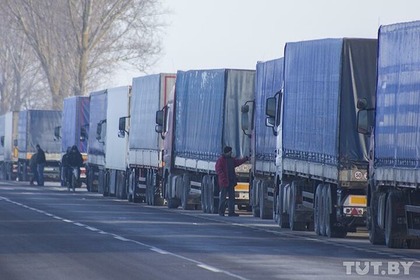
The Minister focused specifically on the critical importance of the Middle Corridor, noting that its share of Uzbekistan’s total freight transport volume surged from 12% in 2021 to 28% in 2025. This exponential growth was propelled by targeted investments in railway electrification, road network modernization, and multimodal logistics systems.
Kuchkarov also cited tourism as a prime example of an industry where enhanced connectivity has unlocked powerful new engines of growth. "Over the past five years, exports of tourism services skyrocketed from approximately $400 million to nearly $5 billion, while the annual influx of foreign visitors jumped from 2 million to 12 million people," he observed.
According to the Deputy Prime Minister, Uzbekistan is channeling "unprecedented investments" into its infrastructure. Last year alone, capital directed into the transport and warehousing sectors reached nearly $2.1 billion. Furthermore, the country is advancing a massive $14 billion transport infrastructure portfolio backed by international partners.
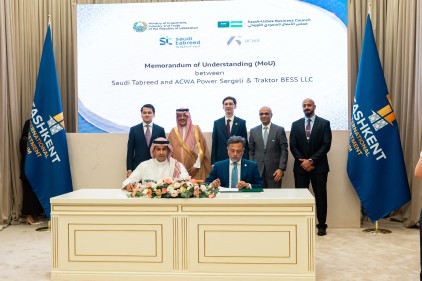
He highlighted the construction of the new Tashkent airport—a joint venture with the International Finance Corporation (IFC) and Saudi Arabia’s Vision Invest—as a flagship initiative. This project, he noted, is poised to transform Uzbekistan into a major international aviation hub connecting East to West and North to South.
Turning to future priorities, the Deputy Prime Minister stressed that no nation can successfully construct roads, pipelines, power grids, or digital data cables in isolation. True connectivity, he argued, demands deep, systemic cooperation. To achieve this, he outlined six strategically vital directions.
The first priority centers on pioneering new rail corridors linking the East and the South. Kuchkarov pointed out that the China–Kyrgyzstan–Uzbekistan railway will carve out a new, direct gateway to the East, dramatically slashing transit times and shipping costs for Central Asian exporters and importers alike.
"In tandem with this, the Trans-Afghan railway will link Central Asia directly to the fast-growing markets of South Asia," he declared. "Combined with the western-bound Middle Corridor, these three critical pathways will guarantee all Central Asian nations reliable, diversified, and seamless access to global markets in every direction."
The second direction he highlighted centers on multilateral development programs and frameworks, particularly the Central Asia Regional Economic Cooperation (CAREC) Program, spearheaded by the Asian Development Bank. According to Kuchkarov, these collaborative frameworks serve as vital complements to national investment blueprints.
The third priority focuses on regional energy integration. The Deputy Prime Minister recalled that in January 2026, Uzbekistan, in partnership with the World Bank, launched the REMIT program. This flagship regional initiative aims to establish the very first integrated electricity market in Central Asia.
"This is a historic milestone toward securing energy independence and long-term sustainability across our entire region," he stated.
Kuchkarov identified the mobilization of private investors as the fourth critical direction. He emphasized that public sector resources alone are simply insufficient to satisfy the rapidly expanding infrastructure demands of a booming economy.
"Within the framework of the 'Uzbekistan – 2030' strategy, we have built an ambitious portfolio of public-private partnership (PPP) projects valued at $30 billion. This initiative intentionally channels private capital directly into infrastructure that fortifies our connectivity and accelerates macroeconomic growth," the Minister declared.
He added that Uzbekistan is actively advancing two flagship transport PPP initiatives designed to streamline connection routes between the nation's primary economic hubs: the Tashkent–Samarkand and Tashkent–Andijan toll highways. According to Kuchkarov, both megaprojects are currently in the final stages of their respective competitive tendering processes.
The fifth strategic direction covers digital transformation and artificial intelligence. The Deputy Prime Minister pointed out that President Shavkat Mirziyoyev has repeatedly categorized digital overhauls and AI integration as paramount strategic priorities to anchor Uzbekistan’s future global competitiveness.
He identified Uzbekistan’s imminent accession to the World Trade Organization (WTO) as the sixth and final direction.
"We are currently in the home stretch of our WTO accession process. This milestone holds fundamental significance for successfully embedding Uzbekistan into the rules-based global trading architecture. Securing membership will firmly lock in our domestic structural reforms, heighten international investor confidence, and deepen our integration with the global economy on a stable and highly predictable foundation," Kuchkarov asserted.
While shipping volumes along the Middle Corridor have expanded nearly fivefold over the past five years, future growth risks hitting a hard ceiling due to fragmented coordination among participating nations. Addressing this bottleneck, international trade experts at the Tashkent International Investment Forum debated why the strategic corridor requires far more than simple capital injections for physical infrastructure. They emphasized that the trade route's long-term survival relies heavily on the introduction of standardized documentation, unified digital data exchanges, and transparent, reliable logistics services.
Stay up to date with all the latest news: