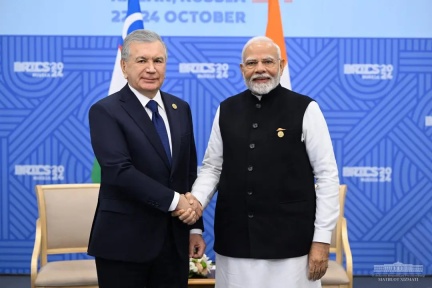
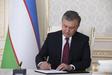
President Shavkat Mirziyoyev is chairing a meeting outlining priority tasks to elevate the ferrous metallurgy industry to a new strategic level.
The Head of State emphasized that ferrous metallurgy serves as a foundational source of raw materials for vital economic sectors—including construction, building materials, automotive manufacturing, mechanical engineering, energy, and electrical engineering—which collectively represent a $50 billion market.
To transition the national economy toward a model driven by technological innovation, Uzbekistan aims to reach a gross domestic product (GDP) of $240 billion by 2030. To hit this target, the nation must maintain an annual economic growth rate of at least 8% to 9%.
At the same time, the President pointed out critical vulnerabilities within the metallurgy sector. These include a heavy reliance on imports, high production costs, excessive energy consumption, and slow progress in implementing digitalization and artificial intelligence.
Strengthening the domestic raw material base, diversifying products, and improving quality have become more urgent than ever. This is especially critical given ongoing global conflicts and severe logistical bottlenecks across major international transport corridors.
Over the past decade, domestic demand for steel sheets, rolled sections, pipes, and metal structures has surged threefold, reaching 5.5 million tons. The construction of the new nuclear power plant, the fourth copper-concentrator plant, and a new copper smelting facility alone will require nearly 2.5 million tons of steel sheets and rebar.
Furthermore, over the next five years, Uzbekistan plans to launch $180 billion worth of new production capacities, execute $27 billion in infrastructure projects, and construct high-rise housing units for 800,000 households.
As a result, annual demand for metal products is projected to climb 1.5-fold, exceeding 8 million tons by 2030. The Head of State instructed responsible officials to establish meticulous, data-driven projections detailing exactly how existing and upcoming industrial capacities will meet this soaring demand.
Currently, the Bekabad Metallurgical Plant produces 40% of its rolled metal from scrap metal, while relying on imports for the remaining 60%. Although 700,000 tons of ferrous scrap are officially supplied to the plant across the country each year, an additional 500,000 tons remain trapped in the shadow economy. To address this, all operations involving the circulation of ferrous metals will now be monitored in real-time through a dedicated digital platform.
A specialized project office will be established within the Government to foster healthy competition, maintain price stability, and implement effective oversight mechanisms in the ferrous metallurgy sector. This office will conduct daily market analyses of metal products, map out supply and demand for both raw materials and finished goods, and manage digital passports that detail product quality, origin, and physical-chemical composition. Officials have been instructed to launch the project office within a month and to bring the ferrous metal trade under control by rolling out the "E-lom" digital platform on August 1.
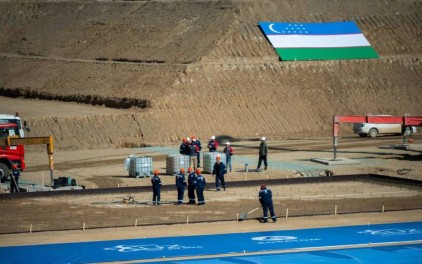
The country holds 1,5 billion tons of iron ore reserves. An agreement has been reached with Chinese partners to extract 650,000 tons of raw iron annually from the Surun-Ota mine, with mandates in place to ensure iron concentrate deliveries to the metallurgical plant begin in 2027. Furthermore, launching operations at the Tebinbulak deposit within the next three to four years will unlock a production capacity of 1 million tons of steel per year.
A memorandum has also been signed to purchase 700,000 tons of raw iron annually from Tajikistan. Moving forward, the immediate goal is to finalize the contract and begin importing materials next year.
Major private enterprises in the metallurgy sector have also expressed readiness to establish a complete technological chain, spanning from geological exploration and mining to finished product manufacturing. For instance, a Samarkand-based company offered to invest up to $500 million in raw material extraction if granted access to an iron mine. Meanwhile, the Bekabad Metallurgical Plant requested permission to develop the Temirkon deposit in Farish, which boasts 32 million tons of iron resources, to expand its raw material base.
The President gave specific directives to create the necessary conditions to support these initiatives. Additional iron ore reserves are also projected to be found in the Tashkent, Samarkand, and Surkhandarya provinces.