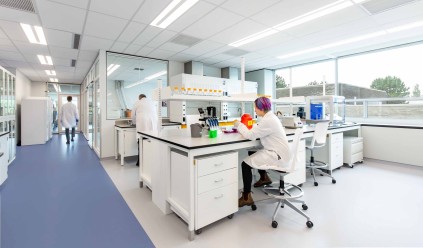
The Academy of Sciences has released details of the Biome Center project, following a memorandum on its creation signed in Seoul on September 14, during the president's visit to South Korea.
"The idea for Biome originated at the Academy's Center for Advanced Technologies, where work on the project is already underway. Signing the memorandum marks a new stage in its development and in building world-class modern infrastructure," the Academy said in a statement.
According to the Academy, cell-based technologies are transforming the very concept of medicine, with living cells possessing specific properties and functions increasingly serving as the basis for treatment.
"This opens up new possibilities for fighting tumors, repairing damaged tissue, and treating diseases for which existing methods fall short. What's needed is an entire system: high-quality cellular material, a deep understanding of its properties, modern laboratories, the capacity to process large volumes of data, production facilities, and collaboration with clinics. Building that system is the whole point of Biome," the Academy explained.
The biobank will assemble and store collections of cellular material that scientists can use to develop cell-based products. Genomic research is needed to determine the identity, properties, stability and safety of cell lines. Bioinformatics and artificial intelligence will be used to match cell characteristics against research findings and test results.
"In this sense, Biome is conceived not just as a genetic database, but as a full-cycle technology platform — spanning everything from the cell and scientific research to the manufacture of a cell-based product and its clinical application," the Academy said.
The Center for Advanced Technologies already operates the country's first stem cell bank, which holds more than 1,200 samples.
"The cell-based products developed there are used to treat burns and restore tissue, and are applied in maxillofacial surgery and ophthalmology. A drug based on NK cells has been developed to fight cancer and is being prepared for clinical use," the Academy added.
Another major focus of the center's work is the "1,000 Genomes" project. Data from more than 1,200 participants, encompassing roughly 10 million genetic markers, is being used to build a genetic map of the population — a resource for studying hereditary traits, predicting disease risk, and advancing personalized medicine.
"Taken together, the Academy of Sciences has now brought together Biome's core pillars: cell-based technologies, genomic research and clinical medicine. The new center will allow us to consolidate this expertise into a single scientific and technological infrastructure and substantially expand the scale of our research and development," the Academy concluded.
Stay up to date with all the latest news: