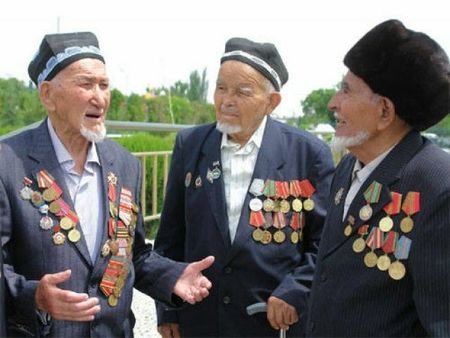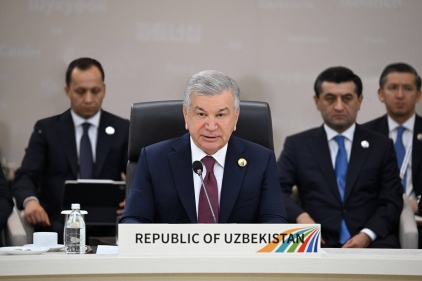
Addressing the first-ever Central Asia-Korea summit in Seoul, the Central Asian leader opened with warm praise for his host, thanking President Lee Jae-myung for organizing the landmark gathering and calling Seoul a city whose dynamism never fails to impress. The relationship between the two sides, he said, is not a recent development — Korea was one of the first countries, back in 2007, to recognize Central Asia's potential as a strategic partner, and the connection between the two peoples runs even deeper, tracing back to the caravan routes of the Great Silk Road. That history, combined with shared values — respect for elders, a strong work ethic, and devotion to homeland — has produced what he described as a friendship rooted in more than just commercial interest, with the region's Korean diaspora standing as a living symbol of that bond.
He used the numbers to make his case for urgency: Central Asia is growing at more than 6 percent a year despite global market turbulence, with a combined GDP now above $500 billion and a population of over 80 million people that is fast turning the region into a "hub of global connectivity" in Eurasia. Paired with Korea's strength in advanced technology and innovation, he argued, the two sides have everything they need to build something bigger — and then laid out five concrete proposals to do it.
First, he called for a shared long-term roadmap — a joint strategic vision to anticipate what skills, industries, and infrastructure the region will need as AI, climate change, and shifting labor markets reshape the global economy, backed by a "portfolio" of forward-looking projects and closer cooperation on cybersecurity.
Second, he pushed to deepen trade and industrial ties, noting that Central Asia has moved beyond being a raw-materials supplier and is now integrating into global value chains. He backed a new forum for industry and trade ministers, called for cutting red tape around certification and market access, and set a target of $20 billion in trade turnover with Korea by 2030 — alongside a proposal to host a joint Central Asia-Korea Industrial and Technology Park focused on auto parts, electronics, machinery, and pharmaceuticals.
Third, he pointed to critical minerals as an area of natural overlap, given the region's vast reserves and Korea's technology and capital, proposing a regional investment alliance to build out everything from exploration to high-value manufacturing.
Fourth, on climate, he offered the region as a platform for Korean green investment under the Paris Agreement, proposing a joint climate and carbon partnership to support a shift toward low-carbon economies.
Fifth, and what he called fundamentally important, was human capital — with more than half of Central Asia's population under 30, he proposed a partnership built on the principle of "order, train, employ," directly linking Korean employers' workforce needs to the region's education systems, including cooperation on artificial intelligence. He suggested tying this effort to President Lee's own "Indispensable Korea" doctrine as a shared pillar for the region's development.
He closed by confirming that his country is ready to host high-level celebrations next year marking two milestones: the 35th anniversary of diplomatic relations with Korea and the 90th anniversary of the Korean diaspora's presence in the region — framing the summit not as a one-off event, but as the start of a long-term partnership built for the decades ahead.